Are Car Air Fresheners Bad for Your Health? Facts
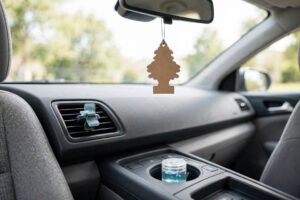
Are car air fresheners bad for your health? Car air fresheners are among the most common car accessories in the US — pine trees, vent clips, gels, and sprays promising a “new car smell” in seconds. But more drivers are asking what’s actually in that little tree hanging from the mirror, and whether those scents pose health risks.
The short version: published research has focused on the chemicals many scented products release — volatile organic compounds (VOCs) and, in some cases, phthalates. The evidence doesn’t show that normal use harms healthy people, but there are sensible reasons to limit unnecessary exposure, and simple habits that help. So are car air fresheners bad for your health? For most healthy adults, the evidence says the risk is low.
Disclaimer: This article is general information for educational purposes only — not medical advice. If you have asthma, allergies, are pregnant, or have concerns about a specific product, talk to your doctor.
What’s Inside a Car Air Freshener?
Most conventional fresheners — hanging cardboard, vent clips, gels, sprays — release fragrance compounds into the air. Manufacturers generally aren’t required to list every fragrance ingredient, since scent formulas are often trade secrets. The compounds researchers focus on:
- VOCs (volatile organic compounds): Carbon-based chemicals that evaporate easily — which is exactly what makes a freshener smell. Studies have reported emissions including limonene, formaldehyde-related compounds, and various solvents.
- Phthalates: Chemicals used to help scents last longer. Some scented products have been found to contain them; not all do, and levels vary widely by brand and format.
- Formaldehyde and other aldehydes: Formaldehyde can form when fragrance compounds like limonene react with ozone in the air — one reason researchers study air fresheners.
Some perspective for anyone asking are car air fresheners bad for your health: VOCs come from countless everyday sources — new car interiors, cleaning sprays, paints. A single freshener is generally a smaller emission source than a freshly detailed interior; researchers’ concern is repeated exposure in a small, enclosed space.
Are Car Air Fresheners Bad for Your Health? What Research Says
Air fresheners have been studied, but the research base is narrower than most people assume — and much of it covers home formats rather than car-specific ones. Here’s where things stand.
What some studies have found
- Some studies have found that air fresheners emit a range of VOCs, and that secondary reactions — like limonene reacting with ozone — can produce formaldehyde and other byproducts.
- Research suggests phthalates can be present in some scented products, and lab analyses have detected them in certain air fresheners.
- A few studies have linked fragranced products to self-reported symptoms like headaches or respiratory irritation in sensitive individuals — but these rely on surveys rather than controlled exposure, so they show association, not causation.
What the research does not show
What’s missing is strong evidence that typical use causes disease in healthy people. The concern comes down to exposure and sensitivity: higher concentrations, longer exposure, and individual susceptibility. The honest position is “limit unnecessary exposure, especially if you’re sensitive” — not “these products will make you sick.” Treat absolute claims in either direction as stronger than the evidence supports.
Do Car Air Fresheners Cause Cancer? What the Evidence Actually Says
This is one of the most-searched questions about air fresheners, and it deserves a straight answer: no published study has shown that normal use of a car air freshener causes cancer. The concern comes from specific chemicals that can appear in fragrance products, so here is what the research actually says about each of them.
Formaldehyde: The International Agency for Research on Cancer (IARC) classifies formaldehyde as a known human carcinogen — but that classification is based on sustained, high-level exposure, such as certain industrial and occupational settings. Formaldehyde can form in small amounts when fragrance compounds like limonene react with ozone in indoor air, which is one reason researchers study air fresheners. Typical consumer exposure is far below the levels tied to cancer risk in occupational studies.
Phthalates and benzene: Some phthalates are considered possible endocrine disruptors, and benzene — detected in a small number of fragranced-product tests — is a known carcinogen at high exposures. Again, the key context is dose and duration: lab detections in products are not the same as evidence of harm from everyday use, and no study has established a cancer link from normal air freshener use.
The honest bottom line: cancer is not an established risk of using car air fresheners, but the presence of these compounds is a reasonable argument for not over-scenting a small, enclosed cabin. If you have specific health concerns, talk to your doctor.
Why Cars Are a Special Case
A car’s cabin holds only about 100 to 150 cubic feet of air, and that matters:
- Concentration builds fast. The same freshener that barely registers in a living room can produce much higher airborne concentrations in a parked car.
- Heat amplifies emissions. A parked car can exceed 130°F inside on a hot day, and heat generally speeds up VOC evaporation.
- You breathe that air directly for your whole commute, often with windows up and recirculation on.
No reason to panic — if you are asking are car air fresheners bad for your health — just know the car is where product choice and simple habits, like ventilating before you drive, make the biggest difference.
Who Should Be More Cautious?
For most healthy adults wondering “are car air fresheners bad for your health,” occasional use is unlikely to be a major concern. Research and health agencies tend to flag a few groups who may be more sensitive:
- People with asthma or allergies — fragrance can trigger reactive airways in some people. If coughing or congestion lines up with a scented product, discuss it with your doctor.
- Pregnant people — some clinicians advise minimizing unnecessary chemical exposure during pregnancy as a precaution.
- Children — kids breathe more air relative to body size, and pediatric sources recommend minimal fragrance use around them.
- People with migraines or chemical sensitivities — fragrance is a commonly reported headache and migraine trigger.
If symptoms concern you, try removing scented products for a couple of weeks and talk to a healthcare professional.
When to Switch to Fragrance-Free: 5 Signs It’s Time
You do not have to give up car air fresheners entirely — but there are clear situations where switching to fragrance-free is the smarter move. Consider making the change if:
- You get headaches, dizziness, or nausea that line up with time in the car. Fragrance is a commonly reported trigger, and symptoms that fade when you ventilate the cabin are telling.
- You notice coughing, sneezing, or congestion that eases when scented products are removed. Try two fragrance-free weeks as a simple test.
- You regularly drive with babies, young children, or pets. Kids breathe more air relative to their body size, and cats and birds in particular are sensitive to strong scents and some essential oils — general guidance is to keep the air as neutral as possible for them.
- You are pregnant. Many clinicians advise minimizing unnecessary chemical exposure during pregnancy as a precaution.
- You drive for a living. Rideshare and delivery drivers can spend hours a day in the cabin, so cumulative exposure is much higher than a typical commute — fragrance-free keeps that exposure near zero.
Switching does not mean living with odors: the fragrance-free options in the Safer Alternatives section above — charcoal bags, baking soda, and unscented absorbers — handle smells without adding scent chemicals. And when you do buy scented products, check labels for manufacturer claims like “phthalate-free” or “low-VOC,” keeping in mind that full fragrance formulas are usually trade secrets and rarely disclosed.
How to Reduce Your Exposure
- Ventilate before you drive. Open the doors or windows for a minute before getting in, especially on hot days, to flush out concentrated air.
- Don’t over-scent. One freshener is plenty — if you can smell it strongly from the back seat, it’s more than you need.
- Choose low-VOC or fragrance-free options. Products marketed as low-VOC or phthalate-free generally emit fewer fragrance compounds.
- Replace, don’t layer. Swap out an old freshener on schedule instead of adding a new one next to a fading one.
- Keep it off the mirror. A large freshener on the rearview mirror can block your view — clip-style or under-seat formats keep your line of sight clear. See our guide to the best non-toxic car air fresheners.
- Fix the smell’s source first. Fresheners mask odors; they don’t remove them. Cleaning — including a fresh cabin air filter — often removes the need for a strong scent.
Safer Alternatives Worth Considering
Activated charcoal bags
Bamboo charcoal bags adsorb odor molecules rather than masking them, so they add nothing to the air. They’re reusable — “recharge” them in sunlight monthly — and last up to a couple of years. They won’t make your car smell like anything, but for many people, neutral air is the goal.
Essential-oil diffusers, used properly
USB or passive diffusers let you control scent and intensity. Use a drop or two, don’t run one continuously in a closed car, and skip oils known to irritate kids or pets.
Baking soda and the cleaning-first approach
Sprinkle baking soda on fabric seats and carpets, let it sit, then vacuum it up — a cheap, effective way to neutralize absorbed odors. With wiped-down surfaces and a fresh cabin air filter, most persistent smells improve dramatically.
Unscented odor absorbers
Gel or bead absorbers sold as “fragrance-free” trap odor molecules without adding scent chemicals — a middle ground if you want something plug-and-play.
For options across every format, see our guide to the best car air freshener.
See also our roundups of the best car air fresheners without chemicals and the best natural car air fresheners.
FAQ
Are car air fresheners bad for your health?
Research suggests conventional scented fresheners can emit VOCs and, in some cases, phthalates, which concentrate more in a car’s small cabin — especially in heat. But research does not show typical use causes illness in healthy people. The takeaway: limit unnecessary exposure, ventilate your car, and consider low-VOC or fragrance-free alternatives if you’re sensitive. This is general information, not medical advice.
Do car air fresheners contain phthalates?
Some have been found to contain them in lab testing, but levels vary widely by brand and format. Choosing products explicitly labeled phthalate-free — or going fragrance-free — is the most reliable way to avoid them.
Can car air fresheners trigger asthma?
Fragrance can be a trigger for some people with asthma or reactive airways — one of the more consistently reported sensitivities. If you notice symptoms around scented products, try removing them for a couple of weeks and discuss it with your healthcare provider.
Are “natural” car air fresheners safer?
Often, but not automatically. Natural products can still emit VOCs — essential oils are volatile compounds by definition — and some people are sensitive to them. “Natural” isn’t a regulated safety claim. What’s generally safer is fewer emitted chemicals overall: fragrance-free or low-VOC products, charcoal absorbers, or a well-cleaned car.
Is it safe to leave an air freshener in a hot car?
Heat speeds up fragrance release. Ventilate before driving on hot days, and consider reducing scented products in summer if you’re sensitive.
What’s the safest way to keep my car smelling fresh?
Start with cleaning: vacuum, wipe surfaces, replace the cabin air filter, and treat absorbed odors with baking soda. If you still want a scent, use one low-VOC or phthalate-free product at a time and ventilate before driving.
Conclusion
Are car air fresheners bad for your health? The honest answer is nuanced: some studies have found that conventional scented fresheners emit VOCs and can contain phthalates, and a car’s small, heat-prone cabin concentrates those emissions more than a room would. But the research stops well short of showing normal use harms healthy people.
Whatever your answer to “are car air fresheners bad for your health,” the practical approach is: clean first, scent second. Use one product instead of three. Ventilate before you drive, especially in summer. If you’re in a sensitive group, lean toward low-VOC, phthalate-free, or fragrance-free options, and check with your doctor if you have real concerns. Sometimes the healthiest-smelling car is the one that just smells like nothing at all.
Are Car Air Fresheners Bad for Your Health? The Bottom Line
If you are still asking are car air fresheners bad for your health, here is the balanced takeaway: for most healthy adults using one product with ventilation, the risk appears low. But are car air fresheners bad for your health if you have asthma, allergies, migraines, or drive with small children every day? For those groups, the honest answer to “are car air fresheners bad for your health” is that limiting exposure is the sensible precaution.
Where can I read more about whether car air fresheners are bad for your health?
Start with the EPA’s indoor air quality resources, which explain how volatile organic compounds affect the air you breathe: EPA: Volatile Organic Compounds’ Impact on Indoor Air Quality. The American Lung Association also publishes guidance on indoor air pollutants: American Lung Association: indoor air resources. After reading those, if you are still wondering are car air fresheners bad for your health, the safest practical step is switching to a fragrance-free charcoal absorber and ventilating your car daily.
Are car air fresheners bad for your health on short trips?
Shorter drives mean less exposure time, which helps. But even on quick errands, are car air fresheners bad for your health when the car has been baking in the sun? Heat concentrates emissions before you even open the door, so ventilating for a minute before driving makes short trips safer too.
What do doctors say: are car air fresheners bad for your health?
Most clinicians do not issue blanket warnings, but doctors treating asthma, allergies, or migraines often advise patients who ask “are car air fresheners bad for your health” to minimize fragranced products as a precaution. It is individualized advice, not a universal rule — which is why talking to your own doctor matters more than any single article.