Walk into any auto parts store and you will face a wall of scented cardboard trees, clip-on pods, gel cans, trigger sprays, and high-tech diffusers. These are all car air freshener types, and they do not all work the same way. Some release fragrance continuously, others only when you decide, and a few remove odors without adding any scent at all.
Choosing among the different car air freshener types matters more than most drivers realize. The wrong format can mean a scent that fades within days, a gadget that blocks your vents, or fragrance chemicals you would rather not breathe inside a small cabin. The right one keeps your car smelling the way you like for weeks or months with almost no effort.
In this complete 2026 guide, we break down all seven car air freshener types: vent clips, hanging fresheners, gels, sprays, electric diffusers, charcoal bags, and odor bombs. For each type you will learn how it works, its pros and cons, who it is best for, and how long it typically lasts, so you can choose with confidence. The descriptions below are based on manufacturer information and widely reported owner experience, not lab testing. If you already know which format you prefer, our main Best Car Air Freshener guide ranks the top products in every category.
In This Guide to Car Air Freshener Types
- The 7 Car Air Freshener Types Explained
- Car Air Freshener Types Compared: Side-by-Side Table
- How to Choose the Right Car Air Freshener Type
- FAQs About Car Air Freshener Types
- More Car Air Freshener Guides
The 7 Car Air Freshener Types Explained
Below is a detailed look at each of the seven car air freshener types sold today, including how each one works, honest pros and cons, who it suits best, and the lifespan manufacturers typically advertise.
1. Vent Clip Air Fresheners
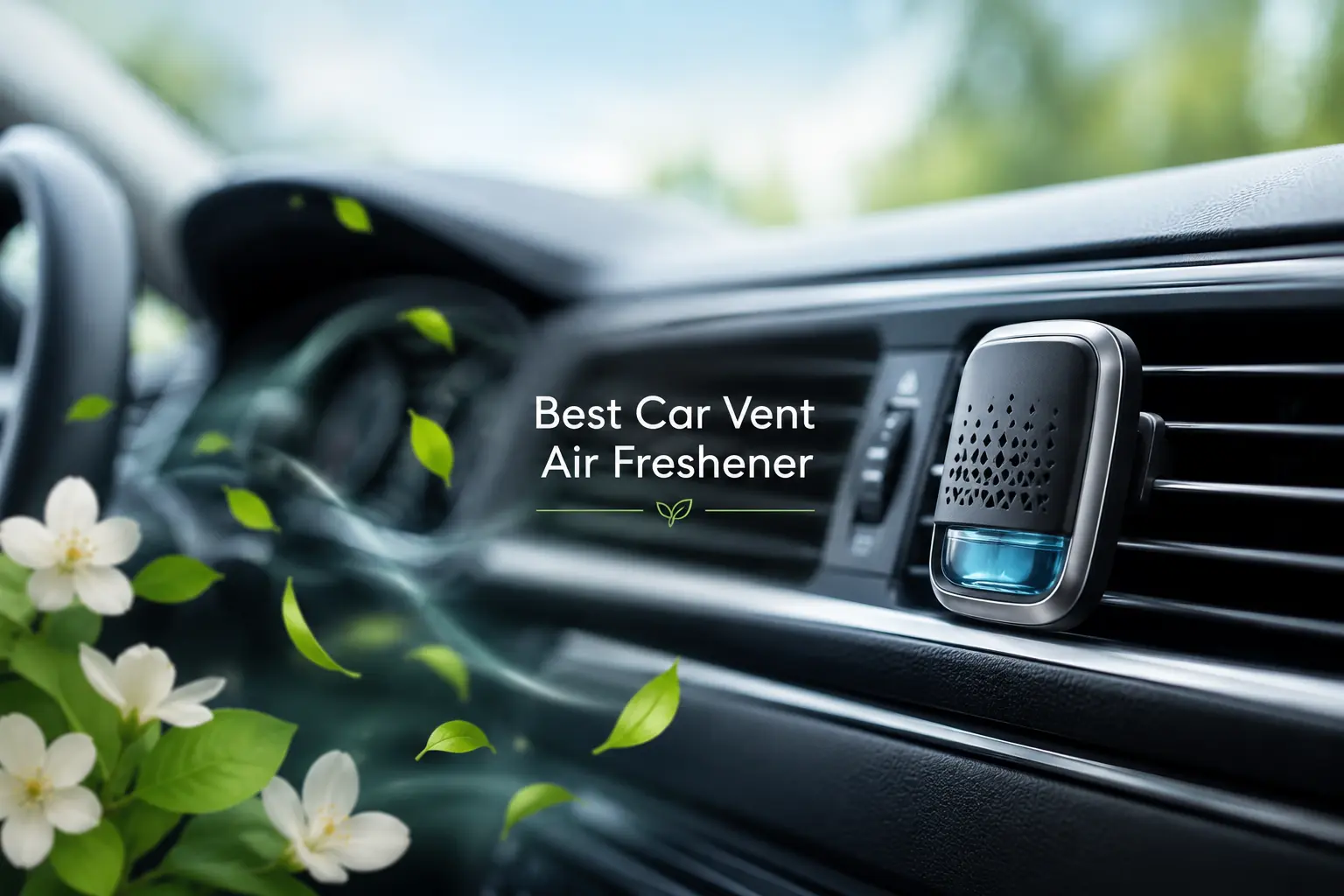
How it works: A vent clip is a small plastic pod, bottle, or membrane device that clips onto your car’s vent slats. It holds scented liquid, oil, or gel, and your heating or air-conditioning airflow carries the fragrance through the cabin. Most models include an adjustable dial or shutter so you can raise or lower the intensity, and some use replaceable scent cartridges so you keep the clip and swap only the refill.
Pros:
- Strong, even scent distribution whenever the fan is running
- Adjustable intensity on most models
- Compact and stays out of your line of sight
- One of the widest scent selections of all car air freshener types
Cons:
- Only performs well when air is flowing through the vents
- Scent can fade quickly if you run the HVAC on high constantly
- Stiff clips can damage delicate vent slats
- Liquid models may leak if knocked or tipped
Best for: Daily commuters who run climate control regularly, rideshare drivers who want a consistently fresh-smelling cabin, and anyone who wants noticeable fragrance within minutes of starting the car.
Lifespan: Manufacturers typically claim about 30 days per unit or refill, though heavy HVAC use can shorten that noticeably.
Learn more: See our best vent clip air fresheners roundup, the Febreze Car Vent Clip review, our vent clip vs. hanging freshener comparison, and Febreze Unstopables vs. Gain.
2. Hanging (Paper) Air Fresheners
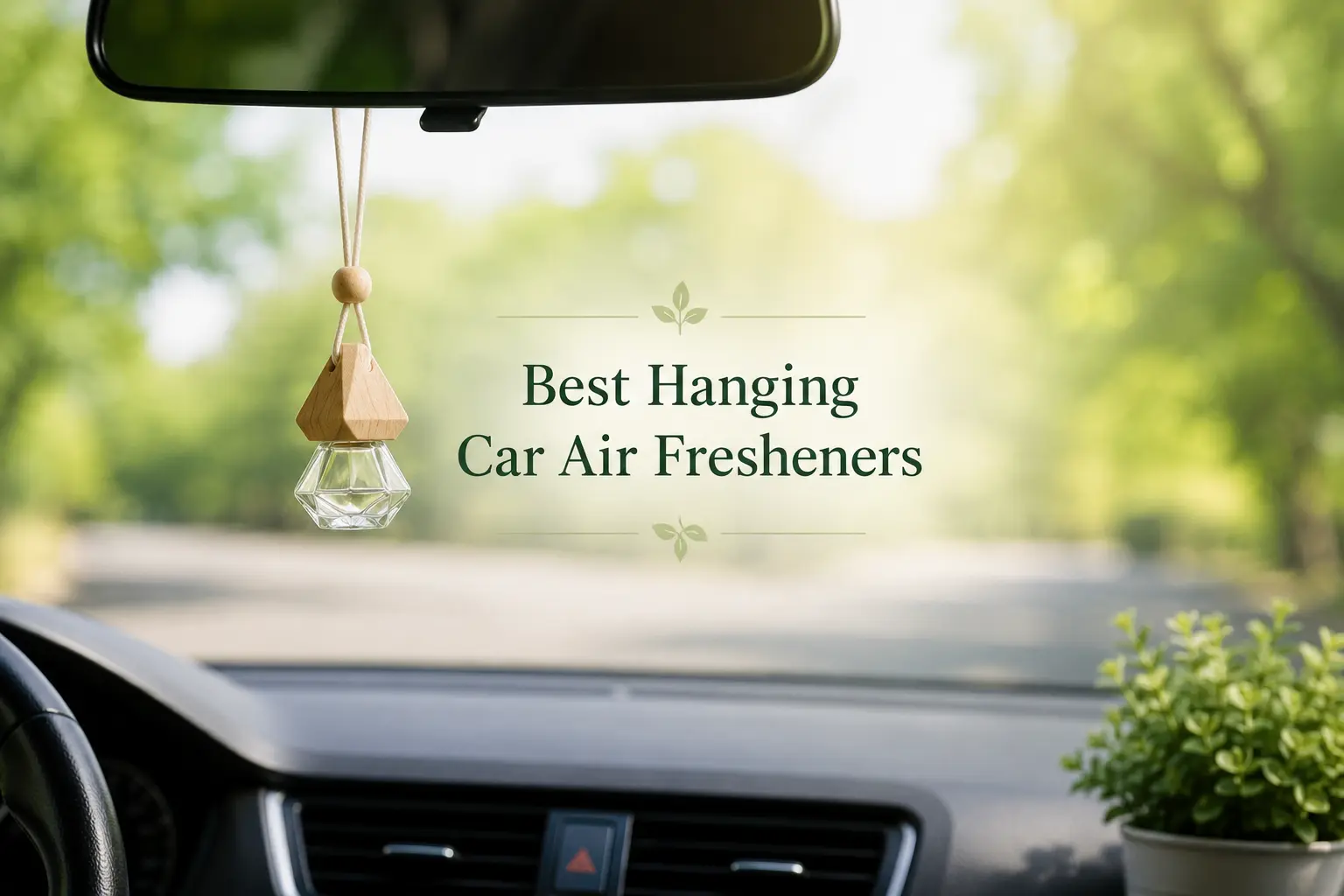
How it works: The classic cardboard tree. Scented paper or cardboard infused with fragrance oils hangs from the rearview mirror and releases scent passively as the oils evaporate into the cabin air. Most come sealed in plastic; exposing more of the paper increases the intensity, which gives you a crude but effective strength control.
Pros:
- The cheapest of all car air freshener types to buy
- Zero installation: hang it and you are done
- Huge variety of scents, shapes, and novelty designs
- Works without vents, power, or airflow
Cons:
- Strongest in the first few days, then fades steadily
- Very limited intensity control beyond the wrapper trick
- Can swing and distract while driving
- Fragrance oils may stain dashboards or mirrors if they make contact
Best for: Budget buyers, anyone who wants instant scent with zero setup, and drivers who like swapping scents frequently.
Lifespan: Often advertised at up to 30 days or more, but noticeable strength commonly lasts one to three weeks, with heat accelerating the fade.
Learn more: Browse our best hanging car air fresheners, the Little Trees Black Ice review, Little Trees vs. Febreze, and Drift vs. Little Trees.
3. Gel Air Fresheners
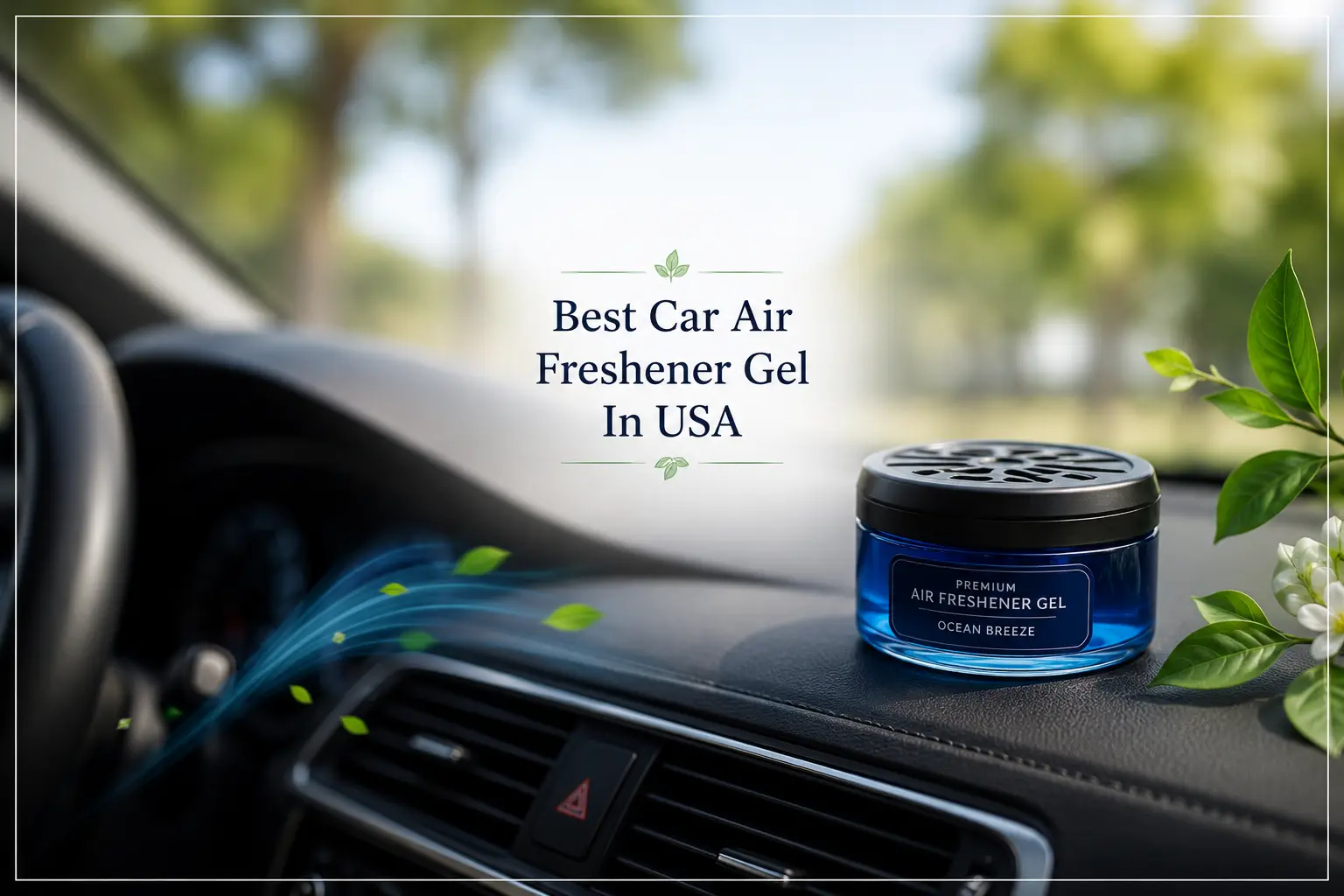
How it works: Scented gel sealed in a vented plastic can or jar sits on the dashboard, in a cup holder, or under a seat. Fragrance evaporates steadily from the gel surface, and opening the lid vents wider increases output. No power, airflow, or hanging is required, which makes gels one of the most placement-flexible car air freshener types.
Pros:
- Steady, low-maintenance scent with no daily attention needed
- Spill-proof designs are common
- Works with the car parked and the HVAC off
- Discreet placement options, including under seats
Cons:
- Summer heat can melt the gel or make it evaporate much faster
- Scent throw is milder than vent clips
- The gel visibly shrinks as it depletes, which some drivers dislike
Best for: Set-and-forget drivers, cars that sit parked for long stretches, and anyone who does not want anything attached to the vents or mirror.
Lifespan: Commonly marketed at 30 to 60 days, though hot climates shorten this range.
Learn more: See our best gel car air fresheners, the gel vs. spray comparison, our longest-lasting gel guide, and the California Scents review.
4. Spray Air Fresheners
How it works: A pump or aerosol spray mists fragrance, and sometimes odor-neutralizing compounds, directly into the cabin air or onto fabrics and carpets. The effect is immediate: one or two sprays can transform the cabin smell in seconds. Because the fragrance is not stored in a slow-release medium, sprays are the most on-demand of all car air freshener types.
Pros:
- Instant results exactly when you want them
- You control the timing, location, and amount precisely
- Ideal for sudden odors: fast food, gym bags, wet dogs, smoke
- Inexpensive per use; one bottle lasts many applications
Cons:
- Shortest-lived effect of all car air freshener types: hours, not weeks
- Can leave residue on glass, screens, or upholstery if overused
- Aerosol propellants add extra volatile compounds to a small enclosed space
Best for: Quick refreshes before passengers get in, spot-treating sudden smells, and drivers who prefer to scent on demand rather than continuously.
Lifespan: A few hours of noticeable effect per application; a single bottle typically lasts months of occasional use.
Learn more: Read our Chemical Guys New Car Smell review, try the homemade car air freshener spray guide, or see the Ozium air freshener review.
5. Electric Car Diffusers
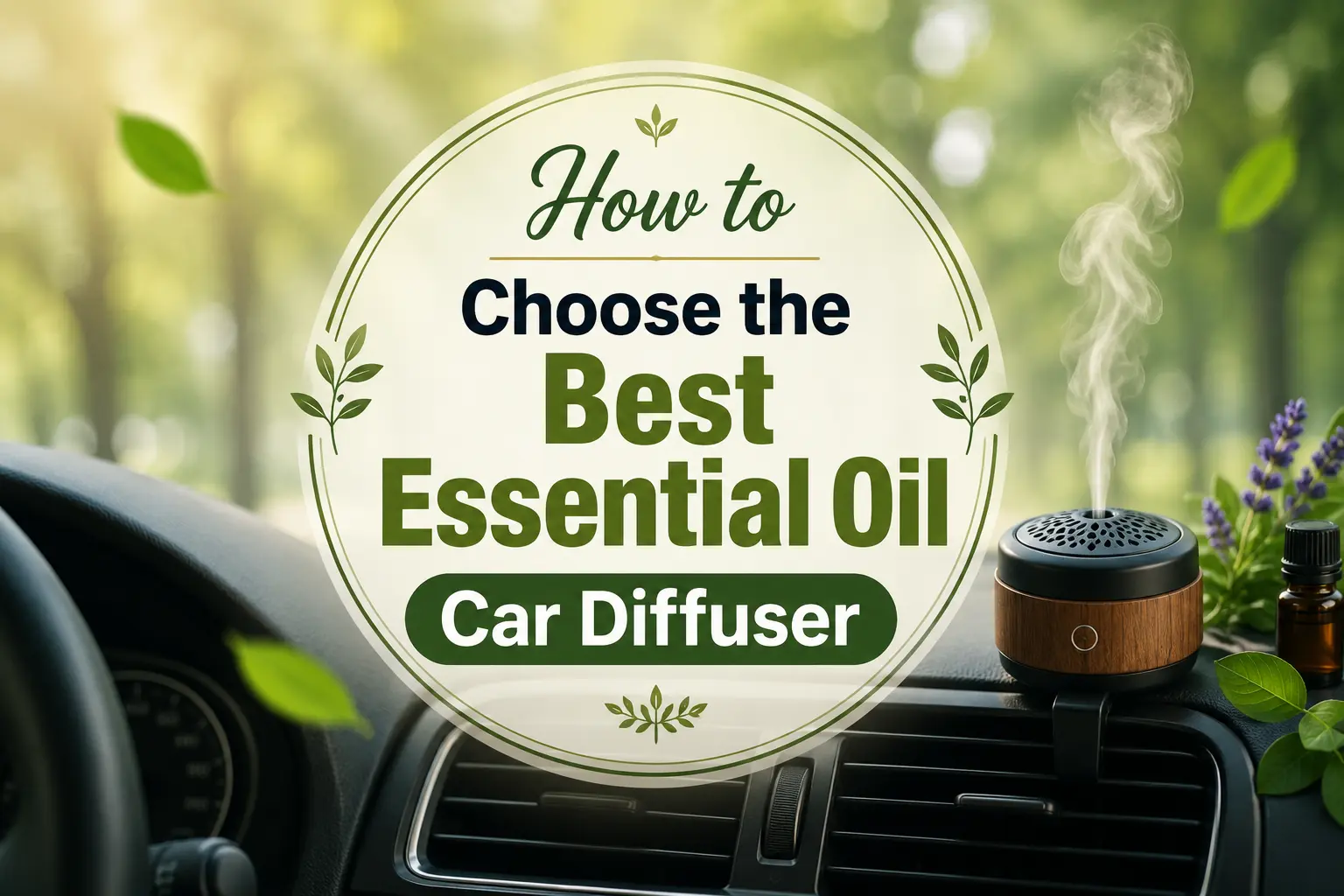
How it works: Electric diffusers plug into a USB port or 12V outlet, or run on rechargeable batteries, and release fragrance from essential oils or scent cartridges using ultrasonic mist, gentle heat, or a small fan. Many models offer timers, multiple intensity levels, auto shut-off, and even app control, making them the most adjustable of all car air freshener types.
Pros:
- Adjustable intensity and scheduling: scent only when you want it
- Nothing hanging from the mirror or clipped to vents
- Reusable for years: just refill the oil or swap cartridges
- Some models double as mini humidifiers
Cons:
- Highest upfront cost among car air freshener types
- Needs a power source while running
- Water-based models need regular refilling and cleaning to prevent residue
- Essential oils can irritate sensitive passengers, children, or pets
Best for: Tech-friendly drivers, essential-oil enthusiasts, and rideshare drivers who want a consistent, controllable cabin scent all day.
Lifespan: The device itself lasts years; each oil fill or cartridge typically lasts from several days to a few weeks depending on the intensity setting.
Learn more: See our Best Car Diffuser pillar page, the Pura Car Diffuser review, how to choose an essential oil car diffuser, and our top-rated aroma oil diffusers.
6. Activated Charcoal Bags
How it works: Bags filled with activated bamboo charcoal trap odor molecules in the charcoal’s massively porous surface through adsorption. Unlike every scented option on this list, charcoal bags add no fragrance at all: they remove smells instead of masking them. Placing the bags in direct sunlight about once a month is said to release trapped moisture and odors so they keep working.
Pros:
- Truly fragrance-free odor control
- No chemicals released into the cabin air
- Reusable for a very long time with simple sun recharging
- A safe pick around kids, pets, and scent-sensitive drivers
Cons:
- Adds no pleasant scent: if you want fragrance, look at the other car air freshener types
- Works gradually rather than instantly
- Needs periodic sunlight recharging to stay effective
Best for: Allergy and asthma sufferers, parents of young children, pet owners, and anyone who wants odors gone rather than covered up.
Lifespan: Commonly marketed at up to two years with monthly sun recharging, the longest advertised lifespan of all car air freshener types.
Learn more: Read do activated charcoal bags work in cars?, our charcoal bag vs. air freshener showdown, and the Purggo car air freshener review.
7. Odor Bombs (Foggers)
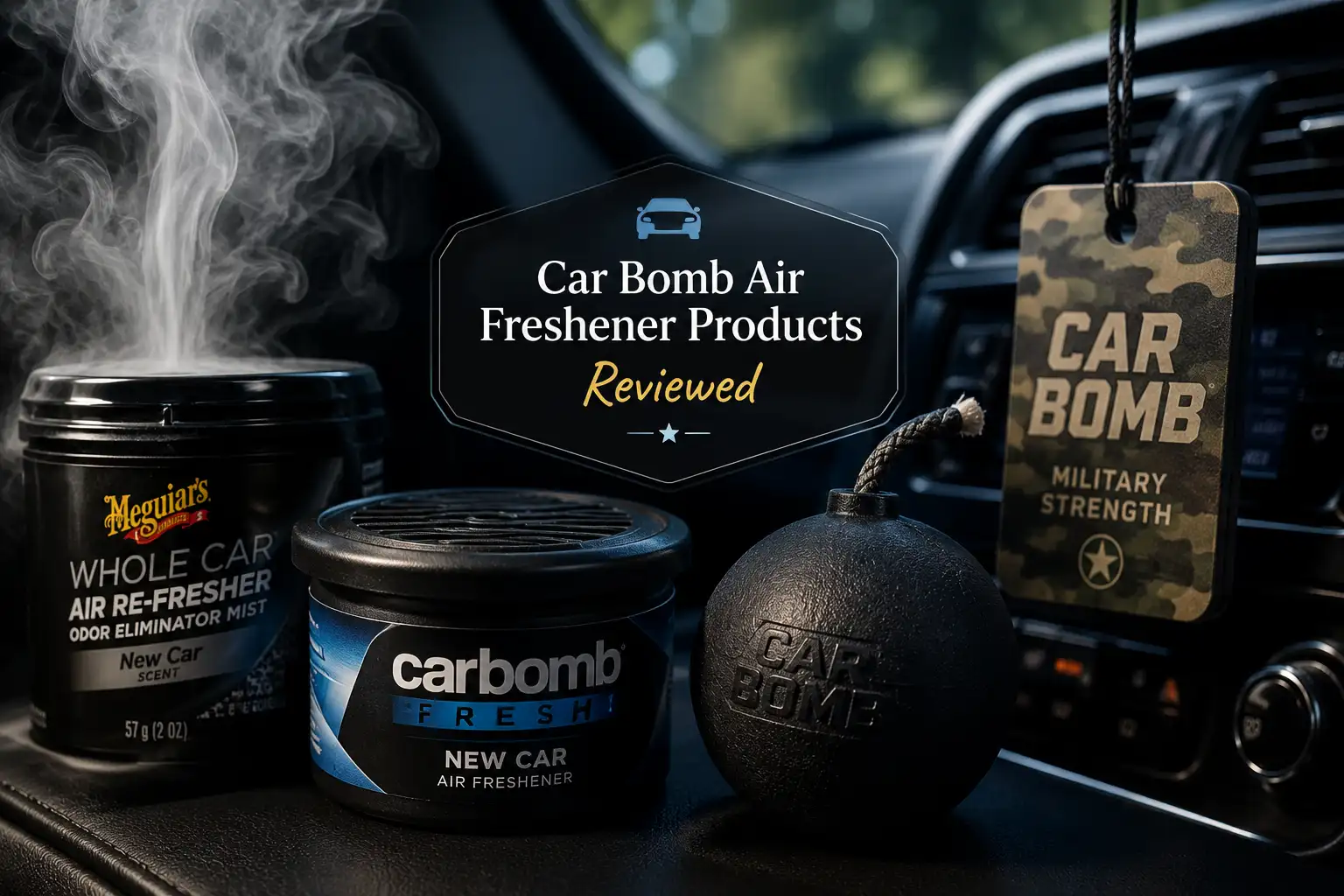
How it works: A single-use canister placed inside the vehicle releases a dense fog of odor-eliminating chemicals while the air conditioning runs on recirculate with the doors closed. The fog penetrates upholstery, the headliner, carpets, and the ventilation system itself, chemically neutralizing embedded smells rather than masking them. After treatment, the car is aired out before driving.
Pros:
- The most powerful reset available for severe odors: smoke, mildew, sour milk, pet accidents
- Reaches places sprays and hanging fresheners cannot
- A single treatment can completely transform a car’s smell
Cons:
- Single-use product, not a daily freshener
- The car must be empty during treatment and ventilated afterward
- Uses strong chemicals: label directions must be followed exactly
Best for: Used-car buyers, smokers’ cars, and any vehicle with deep-set odors that normal car air freshener types cannot fix.
Lifespan: One treatment per canister; results can last months provided the original odor source is gone.
Learn more: See our best car odor eliminator bombs, the odor bomb fogger for smoke guide, the Meguiar’s Whole Car Air Re-Fresher review, and our Best Car Odor Eliminator pillar page.
Car Air Freshener Types Compared: Side-by-Side Table
Use this table to compare all seven car air freshener types at a glance before reading the decision guide below.
| Type | How It Works | Scent Strength | Typical Lifespan | Adds Scent or Removes Odor | Best For |
|---|---|---|---|---|---|
| Vent Clips | Clips to vent; HVAC airflow spreads fragrance | Strong (adjustable) | About 30 days | Adds scent | Daily commuters, rideshare drivers |
| Hanging (Paper) | Scented paper evaporates fragrance passively | Medium, fades fast | 1 to 4 weeks of noticeable scent | Adds scent | Budget buyers, instant scent |
| Gel | Scented gel evaporates from a vented can | Mild to medium | 30 to 60 days | Adds scent | Set-and-forget drivers |
| Spray | Mist sprayed into air or onto fabrics | Strong, very brief | Hours per spray | Adds scent; some neutralize odor | Quick refreshes, sudden smells |
| Electric Diffusers | USB/12V device diffuses oils or cartridges | Adjustable | Device lasts years; refills last days to weeks | Adds scent | Control lovers, essential-oil fans |
| Charcoal Bags | Activated charcoal adsorbs odor molecules | None (fragrance-free) | Up to 2 years with recharging | Removes odor | Sensitive drivers, parents, pet owners |
| Odor Bombs | Fogging canister treats whole cabin at once | Very strong, one-time | One treatment; results last months | Removes odor | Severe smoke, mildew, or spill odors |
How to Choose the Right Car Air Freshener Type
With seven car air freshener types to pick from, work through these five questions to narrow the field to one or two winners for your situation.
1. Do you want fragrance, odor removal, or both? This is the biggest fork in the road. If you love a scented cabin, choose among vent clips, hanging fresheners, gels, sprays, and diffusers. If you mainly want bad smells gone without perfume, charcoal bags or an odor bomb are the honest answer. Many drivers combine them: a charcoal bag for baseline odor control plus a vent clip or gel for fragrance.
2. How sensitive are you (and your passengers) to fragrance? Scented car air freshener types release fragrance chemicals into a small enclosed space, which can bother people with allergies, asthma, or scent sensitivities, as well as children and pets. If anyone in your car reacts to strong scents, start with fragrance-free charcoal bags, and read our guides to the best non-toxic car air fresheners, car air fresheners without phthalates, and organic car air fresheners.
3. How often do you run your car’s fan? Vent clips only shine when air is moving, so they suit drivers who run heat or AC daily. If your car sits parked most of the week or you rarely use climate control, a gel, a hanging freshener, or a charcoal bag will serve you better.
4. What is your budget style: cheapest today or cheapest per month? Hanging fresheners cost the least upfront but need frequent replacing. Charcoal bags cost more initially yet can last up to two years, making them among the cheapest per month of all car air freshener types. Electric diffusers have the highest upfront cost but refills are economical over time. For a full breakdown of longevity, see our longest-lasting car air freshener guide.
5. Do you have health or safety concerns? The U.S. Environmental Protection Agency lists air fresheners among common household sources of volatile organic compounds (VOCs), and notes that VOC levels are consistently higher indoors than outdoors (EPA: Volatile Organic Compounds’ Impact on Indoor Air Quality). A car cabin is an even smaller space, so ventilate when using strong products, follow label directions, and consider fragrance-free options if you are cautious. Our car air freshener health facts article covers this in more depth.
Quick picks by priority:
- Strongest everyday scent: vent clips (see the best vent air fresheners)
- Tightest budget: hanging fresheners (see the best hanging car air fresheners)
- True set-and-forget: gel (see the best gel car air fresheners)
- Instant refresh: spray (see the homemade spray guide)
- Most control: electric diffuser (see the Best Car Diffuser page)
- Fragrance-free odor removal: charcoal bags (see do charcoal bags work?)
- Deep odor reset: odor bomb (see the best odor eliminator bombs)
Gel vs Spray
Gel and spray fresheners sit at opposite ends of the convenience spectrum. A gel releases fragrance slowly and steadily over weeks from a vented can — set it under a seat or in a cup holder and forget it. It works with the car parked and the HVAC off, making it ideal for vehicles that sit unused. A spray delivers an instant burst of fragrance exactly when and where you want it, but the effect lasts hours, not weeks. Think of spray as a maintenance tool, not a daily freshener: use it for quick refreshes before passengers get in or to knock down a sudden odor like fast food or gym bags. Use sprays in an unoccupied car per the label directions, and avoid over-spraying on glass or screens. Many drivers keep both: a gel for the steady baseline and a spray bottle in the glove box for spot treatments.
Vent Clip vs Hanging
Vent clips and hanging fresheners are the two most popular car air freshener types, but they suit different drivers. A vent clip is adjustable, works with your HVAC airflow, and stays discreetly out of your line of sight — ideal for daily commuters and rideshare drivers who want consistent, controllable scent. It only performs when air is flowing, though, and stiff clips can damage delicate vent slats. A hanging cardboard freshener is the cheapest option with zero setup: hang it from the mirror and you are done. It is strongest in the first week, then fades steadily over one to three weeks. The downside is that it can swing and distract while driving, and in some places anything hanging from the mirror is restricted. Choose a vent clip for control and consistency; choose hanging for the lowest cost and simplest setup.
FAQs About Car Air Freshener Types
What are the main car air freshener types?
The seven main car air freshener types are vent clips, hanging paper fresheners, gel fresheners, sprays, electric diffusers, activated charcoal bags, and odor bombs (foggers). The first five add fragrance to your car, while charcoal bags and odor bombs focus on removing odors.
Which car air freshener type lasts the longest?
Activated charcoal bags have the longest advertised lifespan of all car air freshener types: up to two years with monthly sunlight recharging. Among scented car air freshener types, gels typically last longest at 30 to 60 days, followed by vent clips at around 30 days. Sprays last only hours per application but one bottle provides many uses.
Are car air fresheners bad for your health?
It depends on the type and how you use it. Scented car air freshener types release fragrance chemicals into a small enclosed space, and the EPA lists air fresheners among common indoor sources of volatile organic compounds. People with asthma, allergies, or scent sensitivities may react to strong fragrances. Fragrance-free charcoal bags are the lowest-risk option, and ventilating your car regularly helps with any type. Read our car air freshener health facts for the full picture.
Do charcoal bags actually work in cars?
Yes, within their limits. Activated charcoal adsorbs odor molecules rather than masking them, so charcoal bags genuinely reduce musty, food, and pet smells without adding fragrance. They work gradually and need monthly sunlight recharging. They will not perfume your car, so pair one with a scented type if you want fragrance too. See do charcoal bags work in cars? for details.
What is the difference between a vent clip and a hanging air freshener?
A vent clip attaches to your air vent and uses HVAC airflow to distribute adjustable fragrance, working best when the fan runs. A hanging freshener dangles from the mirror and releases scent passively as fragrance oils evaporate, with almost no intensity control. Vent clips generally give stronger, more even scent; hanging fresheners are cheaper and simpler. Our vent clip vs. hanging comparison declares a winner for different drivers.
Can any car air freshener type remove cigarette smoke smell?
For deeply embedded smoke odor, an odor bomb (fogger) treatment is the most effective of all car air freshener types because the fog penetrates upholstery, the headliner, and the ventilation system. For ongoing maintenance afterward, charcoal bags or a strong vent clip help. See our car air freshener for smoke smell guide and the best odor eliminator bombs.
Which car air freshener type is best for pet odors?
Charcoal bags are the best fragrance-free choice for pet odors since they adsorb smells without adding perfumes that may bother animals. For a scented approach, gels and vent clips work well for maintenance between cleanings. See our best car air freshener for pet odor guide for pet-safe picks.
More Car Air Freshener Guides
Continue exploring car air freshener types and related topics across our in-depth guides:
- Best Car Air Freshener: The Complete 2026 Guide (pillar page)
- Best Car Air Fresheners (pillar page)
- Car Scents (pillar page)
- Best Smelling Car Air Freshener
- Best Car Air Freshener for Summer and Winter
- Best New Car Smell Air Freshener
- Best Car Air Freshener for Uber Drivers
- Luxury Car Scents
- Best Refillable Car Air Fresheners
- DIY Car Air Freshener Recipes
- Air Freshener for Car Dashboard
- Car Air Freshener for Smoke Smell
The Bottom Line on Car Air Freshener Types
There is no single best option among the seven car air freshener types: there is only the best type for your priorities. If you want strong, adjustable fragrance for a daily commute, vent clips remain the most popular of all car air freshener types for good reason. If you would rather eliminate odors without adding perfume, charcoal bags are the safest long-term choice. Gels suit drivers who want steady background scent with zero effort, sprays handle emergencies, electric diffusers give maximum control, hanging fresheners win on price and simplicity, and odor bombs rescue cars that ordinary fresheners cannot save.
Whichever format you choose, replace or recharge it on schedule: even the best of the car air freshener types stops working once it is depleted. A practical starting point is one scented type for fragrance plus one odor-fighting type for baseline freshness, then adjust based on how your car smells after a few weeks. Work through the decision guide above, pick your combination, and enjoy a better-smelling drive every time you open the door.