
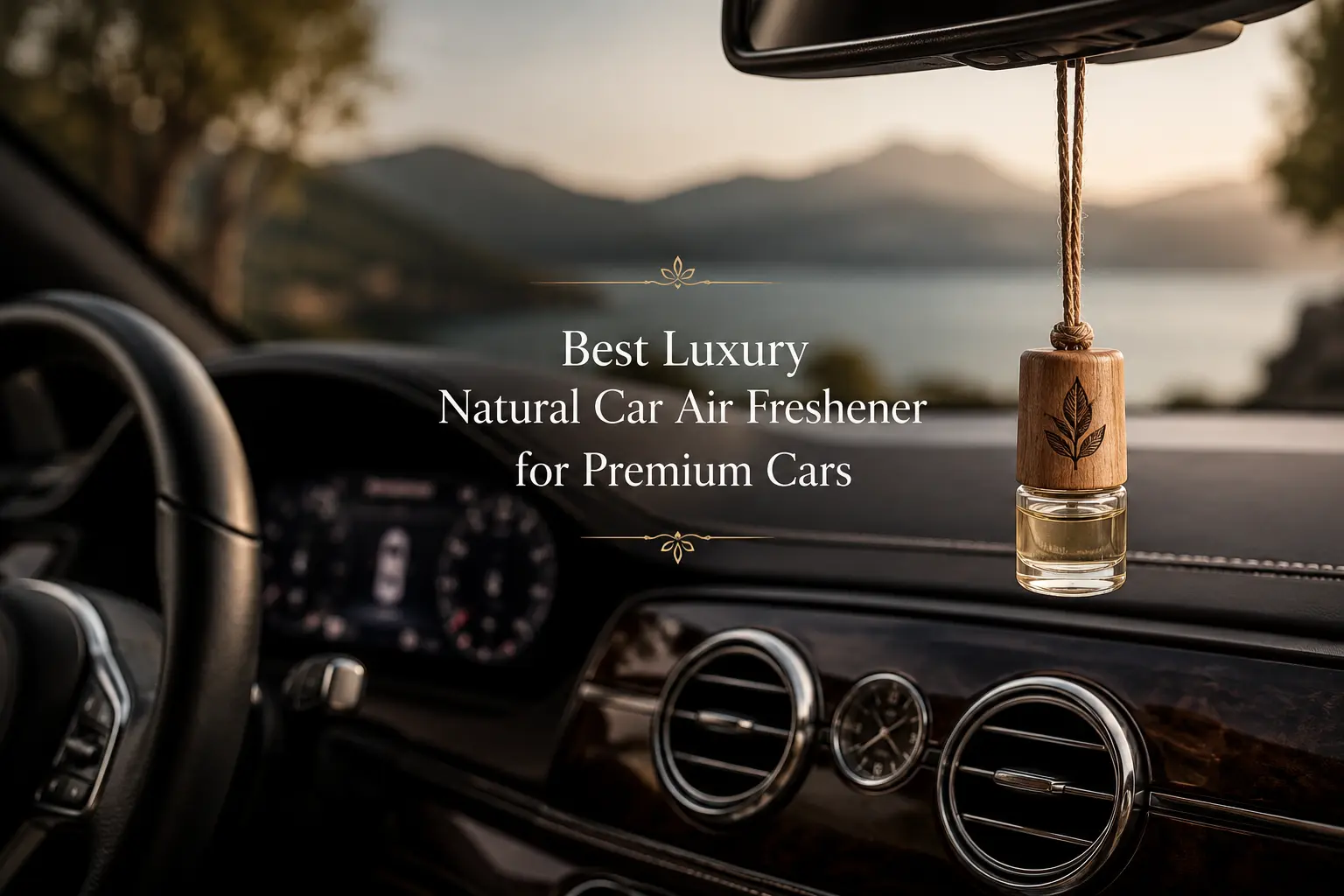
Short answer: For a soft daily scent, Drift’s stone diffuser with essential oils is the easiest pick; for fragrance-free odor removal, Purggo bamboo charcoal bags work best; for a plug-in essential-oil diffuser, Aura Cacia’s car diffuser lets you choose the scent. Check the ingredient list before you buy — “natural” is not a regulated term for air fresheners.
Want no scent at all? See our non-toxic car air freshener guide.
The best natural car air freshener for cars is one of the easiest ways to keep your vehicle smelling clean without exposing yourself to heavy chemical fragrances. Many drivers now avoid synthetic scents and switch to options made with essential oils, charcoal, wood, or plant-based ingredients.
The best products do more than hide odors. They help create a cleaner driving environment while providing a softer and more natural scent. Whether you drive daily, travel with kids, or simply dislike overpowering fragrances, choosing an organic car air freshener for cars can make a noticeable difference.
In this guide, we reviewed the best natural options, compared popular brands, and explained how to choose the right organic car air freshener for your car. If you want options beyond natural ones, see our guide to the best car air freshener.
Why Choose an Organic Car Air Freshener for Cars?
Traditional air fresheners often contain strong synthetic chemicals. In a closed car cabin, those scents can become overwhelming quickly.
The best natural car air freshener focuses on:
- cleaner ingredients
- essential oils
- reusable materials
- odor absorption
- softer fragrance release
Many people prefer the best natural car air freshener because it feels lighter and less artificial during long drives.
Natural products are also popular among:
- families
- pet owners
- rideshare drivers
- allergy-sensitive users
- eco-conscious buyers
What Makes a Car Air Freshener Natural?
Not every product marketed as “natural” is actually clean.
The best natural car air freshener usually avoids:
- phthalates
- aerosol chemicals
- harsh synthetic perfume
- formaldehyde-based ingredients
Instead, it may include:
- essential oils
- bamboo charcoal
- wooden diffusers
- beeswax
- plant-based gels
The goal is to freshen the air naturally without creating an overpowering scent cloud, which is exactly what the best natural car air freshener should do.
Organic Car Air Freshener for Cars: Top Brands Compared
Below are some of the most popular options for drivers looking for a lighter, fresher car scent experience.
| Brand | Type | Best For |
|---|---|---|
| LITTLE TREES Car Air Freshener | Hanging Freshener | Budget scent options (not natural — synthetic fragrance) |
| Drift Car Air Freshener | Stone Diffuser | Premium natural fragrance |
| Chemical Guys Car Fresheners | Spray | Stronger scent lovers (not natural — synthetic fragrance) |
| Febreze Car Scents | Vent Clips | Everyday freshness (not natural — synthetic fragrance) |
| PURGGO Car Air Freshener | Bamboo Charcoal | Odor absorption |
| Enviroscent Auto Sticks | Essential Oil Sticks | Cleaner fragrance |
These brands are commonly recommended for daily use.
Drift Car Air Freshener
Drift Car Air Freshener has become popular because of its minimalist stone design and essential-oil-based scent system.
Pros
- Stylish stone design
- Refillable scents
- Softer fragrance
- Magnetic visor attachment
Cons
- Mild scent — not for drivers who want a strong fragrance
- Needs refills to keep the scent going
It works well if you want a soft scent without strong chemical smells.
PURGGO Natural Car Deodorizer
PURGGO uses activated bamboo charcoal instead of fragrance oils.
Pros
- Fragrance-free
- Absorbs odors naturally
- Lasts several months
- Reusable material
Cons
- No scent — some drivers want a fragrance
- Works slowly; absorbs over time rather than giving instant freshness
This is one of the best choices if you want a true natural car deodorizer instead of a scent-based product.
Aura Cacia Aromatherapy Car Diffuser
Aura Cacia’s car diffuser is a small plug-in unit for the car’s 12V lighter socket. It uses low heat to release the scent of pure essential oil from a refill pad — you add the oil yourself, so the scent is whatever essential oil you choose. It comes with 1 diffuser and 5 refill pads.
Pros:
- Works with any pure essential oil — you choose the scent
- No synthetic fragrance in the diffuser itself — the scent comes only from the oil you add
- Small plug-in unit, easy to install
- Refill pads are replaceable
Cons:
- Needs a 12V lighter socket — not a vent clip
- Oil is not included — you buy the essential oil separately
- Scent lasts up to about 3 hours per session
- Can drain the car battery if left plugged in
Organic Car Air Freshener vs Traditional Fresheners
A standard freshener mainly masks odors. The best natural car air freshener focuses on cleaner scent delivery and odor control.
Traditional Products
- stronger perfume smell
- chemical-heavy formulas
- temporary odor masking
Natural Products
- softer scent
- essential oil blends
- reusable materials
- lower chemical exposure
Many drivers find natural options more comfortable during long trips, another reason the best natural car air freshener keeps growing in popularity.
Best Organic Car Air Freshener for Cars
The right product depends on your preferences, but a few simple guidelines can narrow the choice. If you want continuous scent, pick a vent clip or diffuser style; for fragrance-free odor control, bamboo charcoal is hard to beat. Whatever format you choose, look for a well-reviewed organic car air freshener for cars with clear ingredient labeling and a scent strength that suits your cabin size.
Choose Vent Clips If You Want:
- continuous scent flow
- compact design
- easy replacement
Choose Charcoal Bags If You Want:
- odor absorption
- fragrance-free freshness
- long-term use
Choose Wooden Diffusers If You Want:
- premium appearance
- natural fragrance
- reusable options
Choose Sprays If You Want:
- quick odor removal
- stronger scent
- flexible usage
How to Keep Your Car Smelling Fresh Naturally
Even the best natural car air freshener works better in a clean interior.
Helpful Tips
- vacuum carpets weekly
- clean floor mats
- remove food containers
- wipe cup holders regularly
- open windows occasionally
Removing odor sources is more effective than covering smells, even with the best natural car air freshener.
Choosing the Right Natural Car Scent
Different essential oils create different moods.
| Scent Type | Popular Oils |
|---|---|
| Fresh | Lemon, Eucalyptus |
| Relaxing | Lavender, Vanilla |
| Energizing | Peppermint, Orange |
| Woody | Cedarwood, Sandalwood |
A subtle natural car scent often feels cleaner and less overwhelming than synthetic perfume sprays — a key trait of the best natural car air freshener. Many drivers find that a well-made organic car air freshener for cars delivers just enough fragrance to stay pleasant on long drives without causing headaches or lingering on clothes and upholstery.
Is an Organic Car Air Freshener for Cars Worth It?
For many drivers, yes.
A quality organic car air freshener can provide:
- simpler ingredients
- softer fragrance
- reusable designs
- better odor control
- reduced chemical exposure
Although premium natural products may cost more upfront, they often last longer and create a more comfortable driving experience.
BMW Natural Air Car Air Freshener
The BMW Natural Air Car Air Freshener system is designed specifically for BMW interiors. It uses replaceable scent sticks that attach inside the cabin ventilation system.
Pros
- Factory-style integration
- Cleaner scent delivery
- Easy installation
Cons
- Designed for BMW interiors only
- Premium option — costs more than standard fresheners
It is a premium option for drivers wanting an OEM-style fragrance system — a strong contender for a BMW cabin.
Why Natural Car Fresheners Are Growing in Popularity
Drivers are becoming more aware of cabin air quality. Many now search for:
- safer products
- eco-friendly materials
- reusable fresheners
- essential oil alternatives
That is why searches for natural car air fresheners and organic car freshener products continue to grow.
Where to Place a Natural Car Air Freshener for the Best Scent
Placement matters because scent needs moving air to spread. A vent clip works best on a vent you actually use, while a hanging freshener should hang where it can move freely without blocking your view or touching controls. Charcoal bags work best where air passes but they stay out of the way, such as under a seat. Keep oil-based products off dashboards and plastics, especially in heat, where spills or melting can damage surfaces. See our guide to where to put a car air freshener for the full ranking of spots.
How to Make a Natural Car Air Freshener Last Longer
Refresh scented wood or felt diffusers with a few drops of oil instead of replacing the whole product. Recharge charcoal bags in sunlight each month, as noted in the comparison table, and replace dried herbs before they fade or mold in humidity. Keep the car clean and ventilated so a freshener is not masking a continuing odor, and check the cabin air filter if a musty smell returns when the fan runs.
Popular non-natural alternatives
These two are popular, but they are not natural picks: both use synthetic fragrance. They are listed here only because drivers often compare them with natural options.
LITTLE TREES Car Air Freshener
LITTLE TREES Car Air Freshener is one of the most recognized names in the market.
Pros
- affordable
- many scent options
- easy to find
Cons
- stronger synthetic fragrance
- shorter lifespan compared to charcoal or wood options
While not fully natural, some users still prefer lighter variants for budget-friendly freshness.
Febreze Car Scents
Febreze Car Scents are popular because they are easy to install and provide consistent fragrance.
Pros
- Easy to install
- Consistent fragrance
- Stronger odor coverage
Cons
- Some versions still contain synthetic fragrance ingredients
- Steady scent can feel strong in a small cabin
Final Thoughts
Choosing the right organic car air freshener for cars can completely change how your car feels during daily driving. Essential oil diffusers, charcoal bags, wooden fresheners, and plant-based sprays all provide lighter alternatives to heavily perfumed products. Take time to compare ingredient lists and scent types before you buy, so the option you pick truly fits your driving habits.
Whether you want a subtle natural car scent, a fragrance-free deodorizer, or a premium stone diffuser, there are now many excellent options available for every budget and preference. An organic car air freshener for cars fits easily into any routine, whether you drive daily or only on weekends.
Focus on ingredient quality, scent strength, and long-term usability to find the right natural freshener for your vehicle. The best organic option balances a pleasant, subtle scent with ingredients you can identify on the label, so check labels for plant-based components and avoid vague terms like “fragrance” whenever you can.
From Our In-Depth Guide: Research Notes on Natural Car Air Fresheners
The sections below were consolidated from our companion in-depth guide to natural car air fresheners. This is research-based information, not lab testing — it draws on published ingredient research, U.S. Environmental Protection Agency (EPA) guidance, and manufacturer documentation. Where the evidence is thin, we say so.
What Research Says About Cabin Air and Fragrance Chemicals
A car cabin is one of the smallest indoor spaces most people spend serious time in — the average American driver spends close to an hour a day behind the wheel, in a sealed box of a few cubic meters lined with plastics, foam, adhesives, and fabrics. Anything clipped to a vent shares that air with you, and heat makes it more intense: warm interiors accelerate how quickly both interior materials and freshener products release compounds into the air.
Conventional air fresheners typically rely on synthetic fragrance formulations. Researchers flag not that every synthetic scent is dangerous, but that many products disclose very little: a single word, fragrance or parfum, on a label can stand in for dozens of undisclosed chemicals. Compounds historically found in fragranced products include phthalates (used to make scents linger), formaldehyde (sometimes released by preservatives), and volatile organic compounds such as benzene and styrene. According to the EPA, VOC concentrations are consistently higher indoors than outdoors and come from many common products — and a hot car cabin is an extreme case of an enclosed indoor space.
None of this means a single air freshener will harm a healthy adult. The case for a natural car air freshener is straightforward risk reduction: fewer undisclosed synthetics, lower VOC load, and ingredients you can identify. It matters most for fragrance-sensitive drivers, people with asthma or allergies, pregnant passengers, babies and small children, and pets, who breathe faster relative to body size and cannot tell you when something bothers them.
There is also a practical argument. Many conventional fresheners work by masking: they add a strong scent on top of the underlying odor, and when the scent fades in days or weeks, the original smell is still there. Several natural approaches — especially activated charcoal — work by adsorption instead: odor molecules get trapped in porous material rather than covered up.
How to Spot Greenwashing on “Natural” Labels
“Natural” is not a regulated term for air fresheners, so the word on packaging means whatever the manufacturer wants it to mean. Use this red-flag checklist instead of trusting the front of the box:
- Natural-inspired lines from conventional brands. These often pair a botanical image with the same undisclosed fragrance base. Check the ingredient list, not the marketing.
- “Fragrance” or “parfum” with no breakdown. Under current U.S. labeling norms, fragrance formulas can be treated as trade secrets. A genuinely natural product should tell you what creates the scent.
- “Chemical-free” claims. Everything is made of chemicals, including essential oils and water. The claim is a marketing tell, not a safety credential.
- Essential oils marketed as universally safe. Some essential oils are irritants at high concentration, and several — including tea tree, eucalyptus, pennyroyal, and wintergreen — are documented hazards for cats, dogs, or small children. Natural and safe for everyone are different claims.
Positive signals to look for: full ingredient disclosure, plant-derived scent sources you can identify (essential oils, dried herbs, wood), simple mineral absorbers (activated charcoal, baking soda, zeolite), and third-party certifications such as EPA Safer Choice or EWG Verified — they do not guarantee perfection, but they mean someone other than the manufacturer checked the formula against published criteria.
Six Types of Natural Car Air Freshener Compared
Nearly every option for the best natural car air freshener falls into one of six categories. They work in fundamentally different ways — some add scent, some remove odor. Scent strength and longevity below are relative ranges reported across product listings and user guides, not laboratory measurements.
| Type | How It Works | Scent Strength | Typical Longevity | Best For | Watch-outs |
|---|---|---|---|---|---|
| Activated charcoal bags | Adsorption: porous carbon traps odor molecules | None (fragrance-free) | 1–2 years with monthly sun recharging | Odor removal; fragrance-sensitive drivers; allergies | Slow acting; will not fix severe embedded odors alone |
| Essential oil diffusers | Evaporation or misting of plant oils | Adjustable, mild to strong | Days per fill (passive); ongoing (active) | Customizable scent; aromatherapy fans | Oil safety around pets and kids; spills damage plastics |
| Dried herbs and flowers | Natural evaporation from botanicals | Very mild | 3–6 weeks | Gentle background scent; DIY lovers | Fades fast; replace before molding in humidity |
| Baking soda | Alkaline neutralization of acidic odors | None | Hours (as treatment); weeks (as passive absorber) | Fabric and carpet odors; cheapest option | Must vacuum thoroughly; keep dry |
| Beeswax fresheners | Slow scent release from wax carrier | Mild to moderate | 3–6 weeks | Noticeable natural scent without synthetics | Can soften in extreme heat; check for paraffin blends |
| Wool dryer balls | Wool holds and slowly releases scented oil | Mild | 1–2 weeks per few drops; balls last 1+ years | Zero-waste; reusable; subtle freshness | Subtle effect; essential-oil cautions apply |
DIY Natural Car Air Freshener Recipes
Making your own version of the best natural car air freshener gives you full ingredient control for pennies. A standing safety note for all of these: essential oils are optional in every recipe. If you use them, keep the finished freshener away from children and pets, never let oils pool or spill on interior surfaces, and ventilate the car after placing a new one.
Mason-Jar Baking-Soda Freshener
Add half a cup of baking soda to a small mason jar, drop in 10 to 15 drops of your favorite essential oil, and poke holes in the lid so the scent can escape. It absorbs odors naturally while providing a fresh scent — a customizable, low-cost way to keep the cabin fresh without synthetic sprays.
Wooden Clothespin Vent Diffuser
Add 3–5 drops of essential oil to an untreated wooden clothespin and let it soak in for a few minutes. Clip it to a vent slat. Airflow disperses the scent whenever the fan or AC runs, and you control intensity by adding or withholding drops — refresh weekly. Keep a paper towel under the pin while the oil absorbs so stray drops never touch dashboard plastic.
Dried Herb Sachet
Fill a small cotton or muslin drawstring bag with dried lavender buds, rosemary, cedar shavings, or a mix, plus a tablespoon of uncooked rice to absorb moisture. Hang it from the mirror or tuck it into a seat-back pocket. Gently squeeze the sachet every few days to refresh the scent, and replace the filling every month or so — sooner in humid weather, where old sachets can harbor mold.
Coffee Bean Pouch
Fill a breathable pouch with whole coffee beans. Coffee is a well-known odor absorber (it is why perfume counters keep beans nearby) and releases its own warm scent for two to three weeks. Keep the pouch out of direct sun to slow oil migration from the beans, and replace the beans monthly — stale beans can turn musty rather than fresh.
For more recipes, see our full guide on homemade car air freshener ideas for making the best natural car air freshener at home.
Chemicals Worth Avoiding in Car Air Fresheners
Choosing the best natural car air freshener is half the job; the other half is knowing what to keep out of your cabin. These are the ingredients and formulations researchers and regulators most often flag in fragranced products:
- Phthalates. A class of chemicals used to make fragrances last longer. Several phthalates are documented endocrine disruptors in animal and human studies, which is why many brands now advertise phthalate-free formulas.
- Formaldehyde and formaldehyde releasers. Formaldehyde is a known human carcinogen at sustained exposures, and some preservatives in fragranced products slowly release it over time. It is worth avoiding in any product that will bake in a hot car.
- Benzene and styrene. VOCs occasionally detected in emissions testing of fragranced products. Benzene in particular has no recognized safe exposure threshold according to major health agencies, so minimizing unnecessary exposure in a small cabin is simple prudence.
- Undisclosed fragrance blends. One word can hide dozens of chemicals. If a brand will not tell you what makes its product smell, treat the product as conventional rather than natural, regardless of the packaging imagery.
- Overpowered synthetic musks and fixatives. These are designed to cling to fabrics for weeks — which also means they cling to your car’s headliner and upholstery long after you remove the product.
Babies, Kids, and Pets: Extra Caution
Extra caution is warranted for babies and small children, whose developing systems are more vulnerable to chemical exposures, and for pets — particularly cats and birds, which are sensitive to many airborne compounds including some essential oils. Fragrance-free options like charcoal bags and baking soda are the safest choices around babies and pets because they add nothing to the air. If you use scented natural options, use them sparingly, ventilate the cabin, and avoid oils documented as risky for your specific pets. And note that no freshener — natural or synthetic — removes embedded tobacco odor; elimination has to come before freshening (see our guide on car air fresheners for smoke smell).
Natural Car Air Freshener FAQs
What is the best natural car air freshener?
There is no single best natural car air freshener — it depends on your goal. For pure odor removal with no added scent, activated charcoal bags are the most broadly recommended natural car air freshener across detailing guides. For pleasant scent with ingredient control, a passive essential-oil diffuser or beeswax freshener works well. For the lowest cost, baking soda treatments are hard to beat. Match the type to your problem using the comparison table above.
What is the best natural car deodorizer?
Bamboo charcoal bags are one of the best natural car air freshener options because they absorb odors without synthetic fragrance.
Do natural car air fresheners actually eliminate odors?
Some do, and some only mask. Charcoal bags, baking soda, and thorough cleaning genuinely reduce odor molecules. Scented options — essential oils, herbs, beeswax — primarily add pleasant fragrance, which can cover mild odors but will not remove the source of a strong one. For serious odor problems, elimination methods should come before any freshener.
Do charcoal bags work better than scented fresheners?
They do different jobs, so “better” depends on the goal. Charcoal bags reduce odor molecules without adding scent, which is better for odor removal and for sensitive passengers. Scented fresheners add fragrance, which is better if you simply want the car to smell like lavender or citrus. Many drivers use both: charcoal for continuous background absorption plus a light scented option for ambiance.
Are essential oils safe to use as car air fresheners?
They can be used safely with precautions: a few drops at a time, no spills on interior surfaces, good ventilation, and keeping them away from children and pets. Several essential oils — including tea tree, eucalyptus, pennyroyal, and wintergreen — are documented as toxic to cats and dogs, and concentrated oils can irritate airways in sensitive people. When in doubt, choose a fragrance-free absorber like charcoal instead.
How do you make a natural car air freshener?
Start with the mason-jar recipe (half cup baking soda + 10–15 drops essential oil, holes in lid), or use felt pads, wooden clips, or baking soda with essential oils; the four recipes above cover the common methods. Many DIY versions are reusable and affordable. Just follow the safety notes on essential oils, keep everything secured so nothing becomes a projectile while driving, and replace perishable fillings on schedule.
How long do natural car air fresheners last?
It varies widely by type. Charcoal bags typically work for one to two years with monthly recharging in sunlight. Baking soda works for weeks as a passive absorber. Dried herbs, beeswax fresheners, and coffee pouches generally last three to six weeks. Essential-oil diffusers need refreshing every few days to a week depending on the format. Heat shortens the life of every scented type.
Are natural car air fresheners safe for babies and pets?
Fragrance-free options like charcoal bags and baking soda are the safest choices around babies and pets because they add nothing to the air. Scented natural options still add volatile compounds to a small cabin, so use them sparingly, ventilate, and avoid oils known to be risky for your specific pets.
What chemicals should I avoid in car air fresheners?
The most commonly flagged are phthalates, formaldehyde (and formaldehyde-releasing preservatives), benzene, and high-VOC solvents — plus any undisclosed fragrance blend, since you cannot evaluate what you cannot see. Choosing products with full ingredient lists is the simplest way to avoid all of them at once.
Can I make a natural car air freshener with fragrance oil?
Yes — add a few drops of fragrance oil or essential oil onto felt, wood, or baking soda, and place it near a vent for better airflow. For a genuinely “natural” claim, essential oils are the better pick; the same safety notes on pets, kids, and spills apply either way.
Why do natural car air fresheners smell weaker than synthetic ones?
Natural scents come from plant oils and other mild carriers, so they release more gently than synthetic formulas. The chemicals section notes that synthetic musks and fixatives are designed to cling to fabrics for weeks, which is why a synthetic scent can seem much stronger.
Can I use a regular home diffuser in my car?
A home diffuser is not made for a moving car. It usually needs a power outlet and water, and it can spill on seats and plastics. A car vent clip or a USB diffuser made for vehicles is the safer fit, since it is sized for the cabin and built to handle bumps and heat.
How can I make my car smell good naturally without buying a freshener?
Start by removing the odor source: vacuum, wipe surfaces, and take out food wrappers and damp items. Open the windows to ventilate, use baking soda on fabrics as described above, and check the cabin air filter if a musty smell returns when the fan runs.





3 Comments