Activated Charcoal Bags for Car Odor: Do They Work?
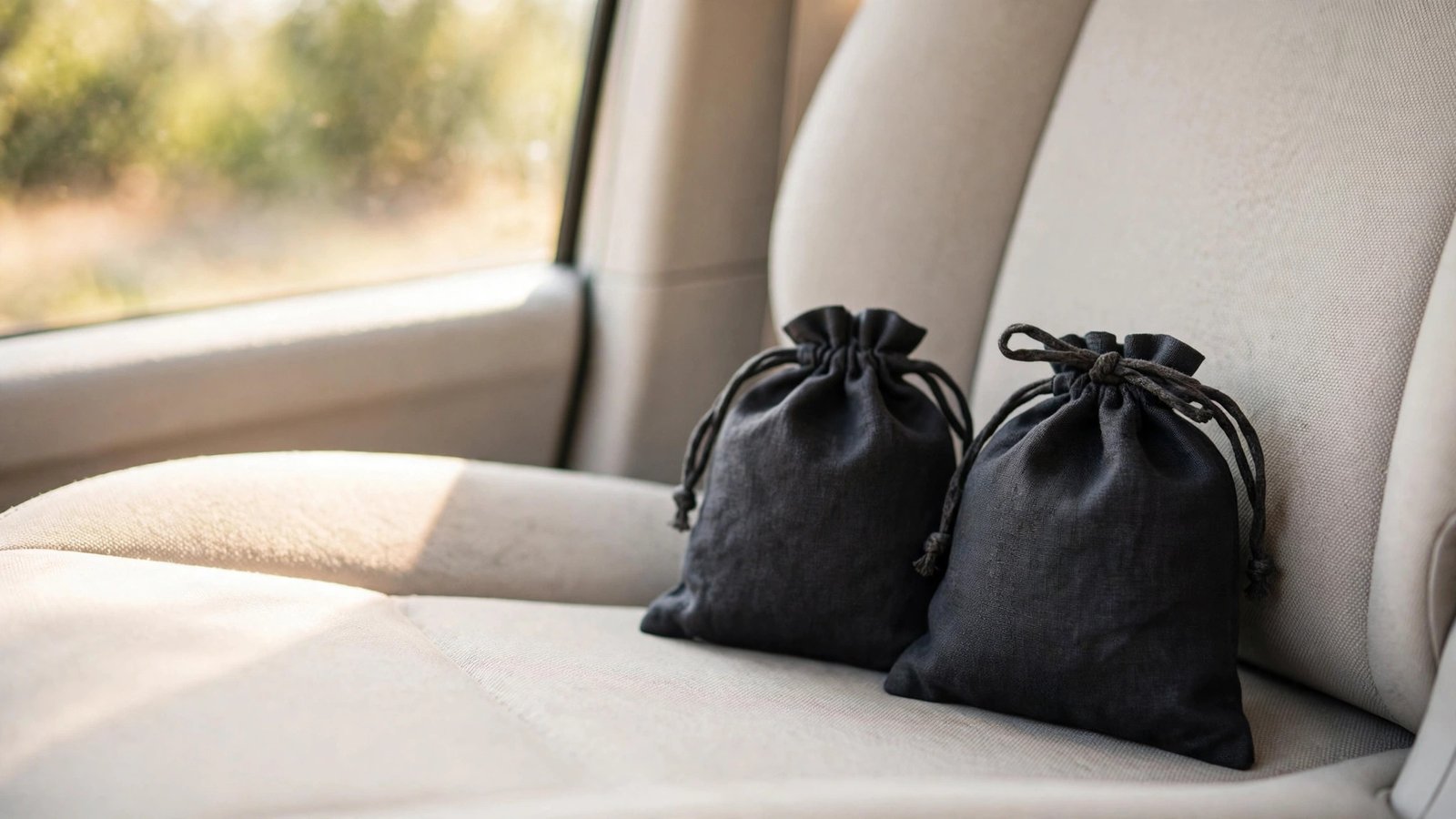
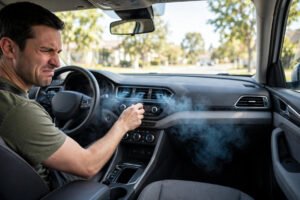
Small gray linen bags filled with black granules promise to erase car smells without sprays or plugs. Activated charcoal bags for car odor absorb smells rather than covering them up — but do they actually work?
Yes — with honest limits. Activated charcoal bags for car odor trap odor molecules, but work slowly, add zero fragrance, and need monthly recharging.
As an Amazon Associate, we earn from qualifying purchases.
How Activated Charcoal Bags for Car Odor Work
The active ingredient is activated charcoal (usually from bamboo or coconut shells), processed at high temperatures to create millions of tiny pores. That gives it an enormous internal surface area — all of which does the work.
Odor removal happens through adsorption (with a “d”), not absorption. Odor molecules from coffee, gym bags, pet hair, smoke, and mildew stick to the charcoal’s pore surfaces as air passes through the breathable bag — the same principle behind charcoal water filters and carbon cabin air filters.
The key consequence: charcoal bags remove smells but add no scent. A charcoal-treated car doesn’t smell like pine or vanilla. At best, it smells like nothing — neutral, clean air. If you want your car to smell nice, charcoal alone won’t get you there.
Not all activated charcoal bags for car odor are equal. Effective bags contain loose granules you can feel shifting inside — not a compressed block or thin pad. — listings stating the charcoal weight per bag give a rough sense of the odor-trapping surface you’re getting.
What to Realistically Expect
What charcoal bags can do
Activated charcoal bags for car odor reduce persistent, low-level background smells — stale food, pet odors, musty mats, general “old car” stuffiness. Working continuously, they excel at preventing buildup between deep cleanings and keeping a reasonably clean car smelling neutral.
Their main selling point is being genuinely fragrance-free: no mist to inhale, no oils evaporating into the cabin. That’s a real advantage for drivers with scent sensitivities or headaches triggered by hanging fresheners.
What they cannot do
- They won’t make your car smell good. They remove odors; they add no fragrance.
- They won’t fix the source. A moldy AC evaporator (see the EPA’s mold guidance), milk rotting under the seat, or a years-old cabin air filter needs cleaning, not a bag. For stubborn smells, see our guide to the best car deodorizers in the USA.
- They work slowly. Passive airflow means gradual improvement over days, not minutes.
- They saturate. Pores fill up; without recharging, a bag eventually stops absorbing and can develop a stale smell of its own.
For a seriously entrenched odor — smoke damage, mildew, years of pet transport — charcoal bags alone won’t be enough. They’re a maintenance layer for an already clean car, not a rescue product.
How to Use Activated Charcoal Bags for Car Odor in Your Car
Placement
Charcoal works passively, so bags need exposure to circulating air near where smells concentrate:
- Under the front seats — decent airflow, close to carpet odors.
- In the trunk — ideal if you haul sports gear, groceries, or pets.
- Under the rear seat — where family cars collect most mess.
- Near the source — a pet’s usual spot, the footwell where a spill happened.
Skip sealed spots like the glove box — with no air movement, the charcoal has nothing to work with. Don’t bury bags under clutter.
How many activated charcoal bags for car odor per vehicle
- Compact car or sedan: 2 bags — one under a front seat, one in the trunk or rear seat area.
- Mid-size SUV or crossover: 3–4 bags.
- Large SUV, truck, or minivan: 4–6 bags.
There are diminishing returns past this point — if two bags aren’t touching the smell, find the source rather than adding a fifth. A common setup pairs charcoal bags for maintenance with a targeted deodorizer; our fragrance-free car freshener guide covers combinations like that.
Tips for best results
- Clean first. Vacuum upholstery, wipe hard surfaces, shampoo or replace stained mats — charcoal handles residual smells far better than active sources.
- Replace the cabin air filter. A clogged filter recirculates stale air and often causes persistent mustiness.
- Give it time. Leave your activated charcoal bags for car odor in place several days before judging results.
- Don’t expect dehumidifying. Charcoal absorbs some moisture, but it isn’t a dehumidifier.
Charcoal Bags vs. Scented Fresheners
Here’s how activated charcoal bags for car odor compare to scented fresheners. The difference is philosophy: charcoal removes odors; scented fresheners mask them.
When charcoal wins
- You want no fragrance at all — sensitivities, allergies, or preference.
- You want continuous, set-and-forget odor control.
- Your car is already fairly clean and you want it to stay neutral.
- You drive rideshare or clients and want an inoffensive cabin.
When scented fresheners win
- You want your car to smell like something pleasant — charcoal can’t do this.
- You need fast results before a passenger gets in.
- You enjoy fragrance as part of driving.
Many drivers use both: activated charcoal bags for car odor as a permanent background layer, plus a scented vent clip or spray when they want the car to smell actively fresh. The two don’t conflict.
Maintenance: Recharging and Lifespan
Proper maintenance keeps your activated charcoal bags for car odor working at their best for longer.
How to recharge charcoal bags
Most manufacturers recommend 1–2 hours of direct sunlight every month or so. UV light and heat drive trapped moisture and some compounds out of the pores, freeing up surface area. Treat this as maintenance that extends useful life — not a reset button.
Don’t wash the bags (water clogs the pores), don’t microwave them despite internet advice, and don’t bake them on the dashboard all day — brief monthly sessions are what’s recommended.
How long do they last?
Many manufacturers claim up to two years with regular recharging. Treat that as an optimistic ceiling — in real-world car use, a more typical useful lifespan for activated charcoal bags for car odor is around one year, less with heavy loads like smoking or constant pet transport.
Signs a bag is spent: odors returning despite recharging, or the bag developing a stale smell of its own. Replace it — these are inexpensive enough that running them past their prime isn’t worth it. — a fresh set once a year is the simplest routine.
Who Should Skip Charcoal Bags
- You want actual fragrance. If a fresh-smelling car means a pleasant scent to you, charcoal will disappoint — choose a scented product instead.
- You need immediate results. Sprays and vent clips work in minutes; charcoal works over days.
- You haven’t fixed the odor source. Mold in the HVAC system or a spill under the carpet beats charcoal every time. Fix the cause first.
- You won’t recharge them. Without monthly sun sessions, performance fades and you’ll conclude they “don’t work.”
FAQ
Do activated charcoal bags for car odor really absorb smells?
Yes — through adsorption, odor molecules stick to the charcoal’s porous surface as air circulates through the bag. They reduce lingering background smells, but work gradually and can’t fix a smell’s source. For heavy-duty problems, see our roundup of the best car deodorizers in the USA.
Will charcoal bags make my car smell good?
No. They remove odors but add zero fragrance — at best, your car smells like nothing. For a pleasant scent, you need a scented freshener.
How many charcoal bags do I need?
Two for a compact car or sedan, three to four for a mid-size SUV, four to six for a large SUV, truck, or minivan. Place them where air circulates: under seats, in the trunk, near known sources.
How often should I recharge charcoal bags?
Most manufacturers recommend 1–2 hours of direct sunlight per month. This extends useful life but doesn’t fully restore the charcoal. Don’t wash or microwave the bags.
How long do activated charcoal bags for car odor last?
Many manufacturers claim up to two years with recharging, but a typical real-world car lifespan is around one year — less with heavy odor loads. Replace the bag when odors return despite recharging.
Are charcoal bags better than regular air fresheners?
Better if you want fragrance-free, continuous odor reduction without aerosols. Worse if you want your car to smell like something or need fast results. Many drivers use both — charcoal for baseline control, a scented product for fragrance. Our fragrance-free car freshener guide covers more fragrance-free options.
How long do activated charcoal bags take to work in a car?
They work gradually, not instantly. Expect noticeable improvement over several days of continuous use, with full effect building over one to two weeks as air keeps circulating through the bags.
Do charcoal bags work on cigarette smoke smell?
They can reduce lingering smoke odor, but heavy buildup needs deep cleaning first. Shampoo fabrics, wipe hard surfaces, and replace the cabin air filter, then use charcoal bags to handle the residual smell.
Can you recharge charcoal bags more than once?
Yes. A monthly session of one to two hours in direct sunlight can be repeated many times over the bags life. When odors return even after recharging, the bag is spent and should be replaced.
How Many Charcoal Bags Do You Need for Your Car?
As a rule of thumb, match the number of bags to the size of the vehicle and the strength of the odor. Two bags are usually enough for a compact car or sedan: place one under a front seat and one in the trunk or rear seat area.
For a mid-size SUV or crossover, step up to three or four bags. A large SUV, truck, or minivan does best with four to six bags. Spread them across zones – under the front seats, in the trunk, under a rear seat – so air circulates around each one. Match the count to the odor load too: a lightly used commuter car needs fewer bags than a vehicle that regularly carries pets, gym gear, or smokers.
Common Mistakes That Make Charcoal Bags Stop Working
The most common mistake is sealing the bag where air cannot reach it. Charcoal left in its plastic packaging, or tucked deep in a closed glove box or center console, has almost no air passing through it and does very little. Take new bags out of their packaging and place them where cabin air circulates.
Another common mistake is skipping the monthly sunlight recharge. The pores fill up with trapped odor molecules over time, and without the heat and UV of a sun session, the bag gradually stops adsorbing. Set a monthly reminder, and replace bags when odors return even after recharging.
Finally, do not expect charcoal bags to add scent. They remove odors; they never add fragrance. If you want actual fragrance alongside odor control, see our guide to the best car air freshener for scented options that pair well with charcoal bags.
Conclusion
Activated charcoal bags for car odor do work — within honest limits. They quietly adsorb odor molecules and keep a clean car smelling neutral, without fragrance, sprays, or chemicals. They won’t perfume your cabin, rescue a neglected interior, or fix mold in your vents. Placed where air circulates, recharged in sunlight monthly, and replaced about once a year, they’re one of the simplest fragrance-free odor tools for a car — see also our best natural car air fresheners roundup for more unscented options.
The deciding question: do you want your car to smell like nothing, or like something? If it’s nothing, activated charcoal bags for car odor are worth trying. — give them a week in a clean car and judge for yourself. If it’s something, skip the charcoal and pick a scented freshener instead.



6 Comments