Last updated: October 2026 — If your car smells like stale fast food, wet dog, or a decade of cigarette smoke, a pine-scented tree hanging from the mirror is not going to fix it. You do not need more fragrance. You need a car odor eliminator: a product or method that neutralizes, absorbs, or removes the odor itself instead of covering it up.
This complete guide explains why car odors happen, how to tell an eliminator from a freshener, the methods that research and detailing professionals actually rely on, and a step-by-step process you can follow this weekend. No hype, no invented lab tests — just a practical breakdown of what each car odor eliminator method does, where it works best, and how to keep smells from coming back.
In This Guide
- Why Car Odors Happen (and Why an Eliminator Matters)
- Types of Car Odors: Know What You Are Fighting
- Car Odor Eliminator vs. Air Freshener
- 7 Car Odor Eliminator Methods That Work
- Methods Compared Side by Side
- Step-by-Step Odor Removal Process
- Prevention Tips
- FAQs
- Related Guides
Why Car Odors Happen (and Why a Car Odor Eliminator Matters)
A car is essentially a small, sealed box lined with fabric, foam, carpet, and headliner material. Every one of those surfaces is porous, which means it absorbs and holds onto whatever is in the air: smoke, spilled coffee, fast-food grease, pet dander, sweat, and moisture. Heat makes it worse — on a warm day, the interior of a parked car can climb far above the outside temperature, and heat accelerates the release of trapped odor molecules back into the air. That is why a car that smelled “fine” in the morning can smell terrible by the afternoon.
Air fresheners work by adding fragrance to the air. They do not remove anything; they compete with the bad smell until the fragrance fades, and then the original odor is still there. A car odor eliminator works differently: it targets the odor itself through absorption (trapping odor molecules, as activated charcoal does), chemical neutralization (changing odor compounds into odorless ones), or physical removal (cleaning the contaminated material out of the car). For light, pleasant scenting after the real work is done, a freshener is fine — but for genuine odor problems, elimination has to come first. Our Best Car Odor Eliminator roundup looks at products built specifically for this job.
Types of Car Odors: Know What You Are Fighting
Different smells come from different sources, and the right car odor eliminator depends on what you are dealing with. Here are the most common categories:
Cigarette and Cigar Smoke
Tobacco smoke is one of the hardest odors to remove because it does not just stay in the air — residue settles into the headliner, seats, carpets, and ventilation system. Researchers call the lingering residue “thirdhand smoke,” and it can persist for months or years after the last cigarette. Surface wiping alone rarely solves it; smoke odor usually needs a combination of deep cleaning and an aggressive car odor eliminator such as a fogger plus charcoal absorption. If you are dealing with this specifically, see our guides to the best air freshener for cigarette smoke in cars and the best car air freshener for heavy smokers.
Food and Drink Spills
Spilled coffee, milk, fast food, and takeout grease are classic car odor sources. Milk is particularly notorious: spilled dairy seeps into seat foam and carpet padding, where bacteria break it down and produce sour, rancid smells that get worse with heat. Greasy food odors cling to every surface and recirculate through the vents. The fix starts with finding and removing the spill residue — no car odor eliminator can overcome an active, rotting food source. Delivery drivers deal with this constantly; our food-delivery driver guide covers strategies for cars that carry food all day.
Pet Odors
Dogs bring dander, saliva, wet fur, and the occasional accident into the car. Pet odor lives in upholstery fibers and is reactivated by humidity — which is why a car can smell fine on a dry day and terrible after rain. Enzyme-based cleaners are widely recommended for organic pet stains because enzymes break down the proteins that cause the smell, rather than just masking them. For ongoing freshness with animals, see our guide for pet owners.
Musty Air Conditioning and Mold
If the car smells musty specifically when the AC turns on, the evaporator core or cabin air filter is the likely culprit. Moisture condenses on the cold evaporator every time the AC runs; in dark, damp ductwork, mold and bacteria can grow and blow musty air into the cabin each time you start the car. This is a mechanical problem as much as an odor problem — cleaning or replacing the cabin air filter and treating the evaporator area addresses the source. Our full walkthrough, Car Smells Musty When AC Is On? Fix It Fast, covers the diagnosis and fixes in detail.
Sweat, Gym Gear, and Body Odor
Gym bags, damp workout clothes, and post-workout seats leave behind sweat and bacteria that thrive in warm upholstery. The smell is organic and moisture-driven, so it responds well to the same playbook as pet odor: remove the source (do not store gear in the car), clean the fabrics, ventilate, and use an absorptive car odor eliminator like charcoal between workouts. Athletes can find more targeted advice in our gym smell guide.
Moisture and Mildew
Leaky door seals, clogged sunroof drains, wet floor mats, and forgotten damp items create mildew — a distinctly dank, earthy smell. Mildew means moisture is present, so the first step is always finding and fixing the water entry: check seals, drains, and the spare-tire well. Once the car is dry, baking soda and charcoal handle the residual smell well, and the upholstery may need extraction cleaning if the dampness sat for a long time.
Chemical Smells and “New Car Smell”
That distinctive new-car scent comes from volatile organic compounds (VOCs) released by plastics, adhesives, and upholstery — a process called off-gassing. The U.S. Environmental Protection Agency notes that VOC concentrations are consistently higher indoors than outdoors and come from many common products and materials. In a new car, the practical car odor eliminator approach is ventilation: airing the car out regularly lets VOC levels drop naturally over the first months of ownership, and charcoal bags can help absorb airborne compounds in the meantime.
Car Odor Eliminator vs. Air Freshener: Why the Difference Matters
It helps to think of it this way: an air freshener adds scent, while a car odor eliminator subtracts odor. Fresheners — hanging cardboard trees, vent clips, sprays with fragrance — release pleasant-smelling compounds that compete with bad smells for your nose’s attention. They are great for maintaining a nice-smelling car that is already clean, and many drivers enjoy them daily.
But when there is a genuine odor problem, masking creates a cycle: the fragrance fades in days or weeks, the underlying smell returns, and you buy another freshener. Worse, layering strong fragrance over mildew or smoke can produce a combination that smells worse than either alone. A car odor eliminator breaks the cycle by reducing or removing the odor molecules themselves — through adsorption onto charcoal, chemical neutralization, oxidation, or physical extraction from fabrics.
The practical rule: eliminate first, freshen second. Remove the source, clean, treat with an eliminator method, and only then add a freshener for ambiance if you like. For a deeper comparison of the two approaches, read Charcoal Bag vs Air Freshener: What’s Better for Car Odor Removal?, browse the complete guide to car air freshener types, or start with our Best Car Odor Eliminator picks.
7 Car Odor Eliminator Methods That Work
Below are the main approaches, from passive absorbers you leave in the car to intensive treatments for severe smells. Most real-world odor problems are solved by combining two or three of these.
1. Activated Charcoal Bags
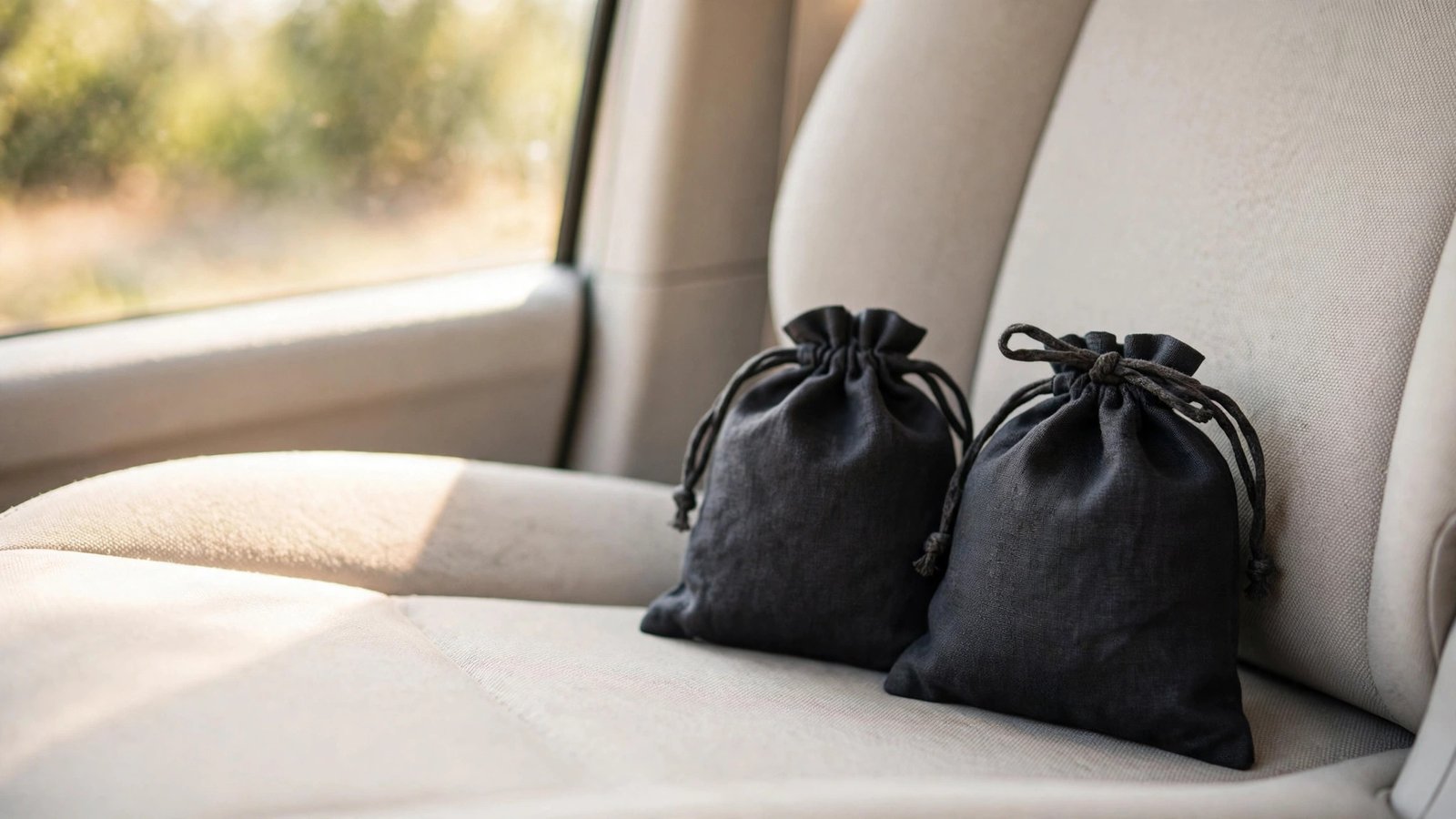
Activated charcoal (also called activated carbon) is one of the most widely used odor absorbers in air filtration. Its effectiveness comes from surface area: activation creates a vast network of microscopic pores that trap odor molecules through adsorption as air circulates. In a car, charcoal bags are placed under seats or in the trunk, where they passively absorb smells over days and weeks without any fragrance, electricity, or chemicals — which is why they are popular with drivers who want a fragrance-free car odor eliminator.
Charcoal works best as a maintenance tool and for mild-to-moderate odors rather than as a one-shot cure for severe smoke or mildew. Many manufacturers recommend “recharging” the bags in direct sunlight periodically, which releases trapped moisture and refreshes their capacity. For a full breakdown, see Activated Charcoal Bags for Cars: Do They Work? and our Purggo car air freshener review, which covers a popular bamboo-charcoal option.
2. Odor Bombs and Foggers
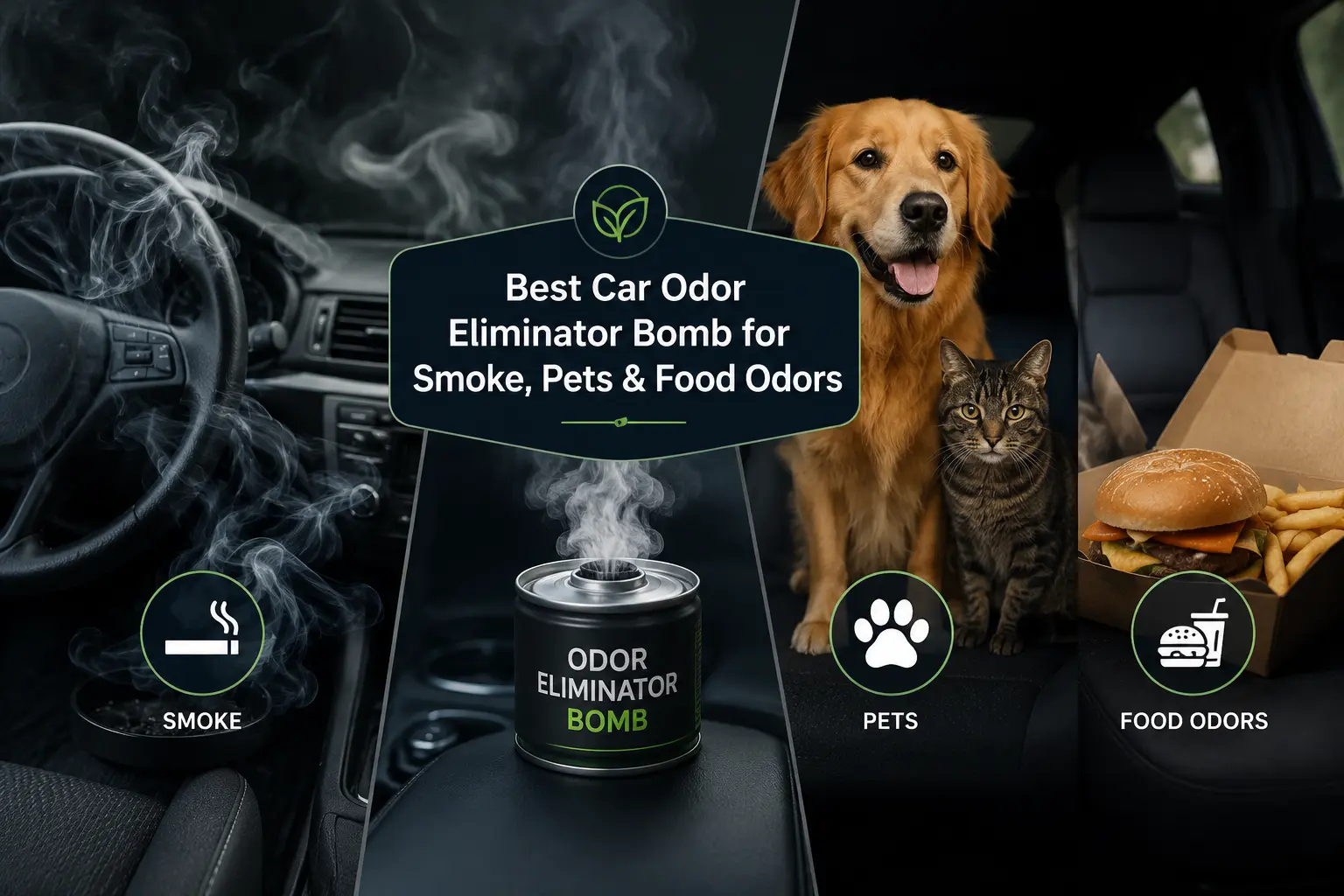
Odor bombs (foggers) are total-release aerosol treatments designed for severe, embedded odors — especially smoke. You place the canister in the car, activate it, close the doors, and let a fine mist circulate through the entire cabin, including the ventilation system, for a set period. The mist contains odor-neutralizing or sanitizing agents that reach surfaces you could never wipe by hand, such as inside the headliner and ductwork.
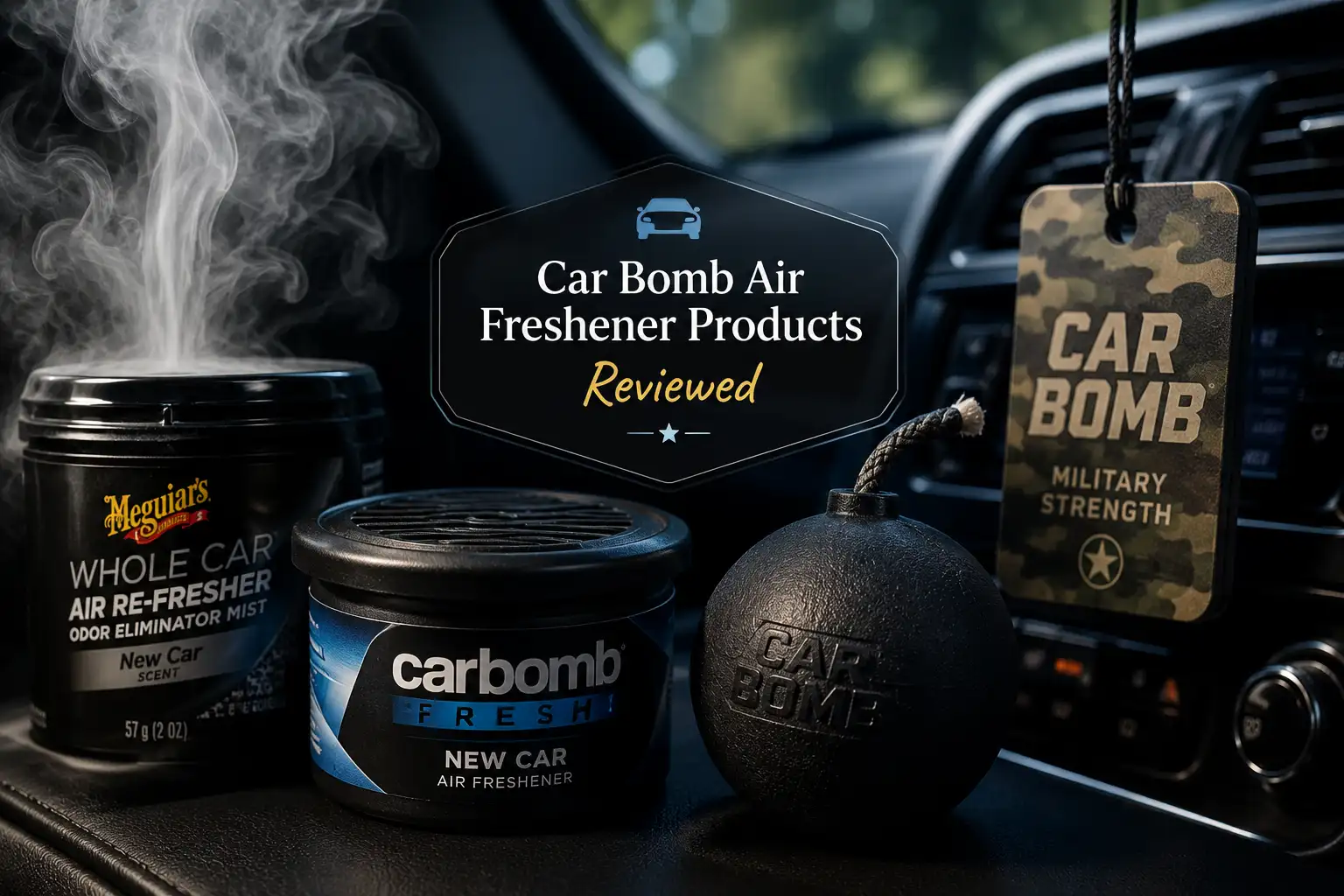
Foggers are the heavy artillery of car odor eliminator treatments: effective, but follow the label directions exactly, ventilate the car thoroughly afterward, and keep people and pets out during treatment. For product-level detail, see Best Car Odor Eliminator Bomb for Smoke, Pets & Food Odors, Top Car Bomb Air Freshener Products Reviewed & Compared, and our Meguiar’s Whole Car Air Re-Fresher review.
3. Odor-Eliminating Sprays
Unlike fragrance sprays that simply add scent, odor-eliminating sprays are formulated to neutralize odor molecules on contact — many use cyclodextrin or similar compounds that trap odor molecules, along with sanitizing ingredients that reduce odor-causing bacteria. They are ideal for targeted treatment: a quick spray on seats, carpets, headliner, or into the vents for immediate improvement.
Sprays are a spot-treatment car odor eliminator rather than a whole-car solution; they work on what they touch, so pair them with cleaning for embedded smells. Well-known options in this category include Ozium-style sanitizing sprays. Compare the leading contenders in Ozium Air Freshener Review: The Smoke Killer Tested, Ozium vs Meguiar’s: Which Smoke Odor Killer Wins, and Febreze vs Ozium: Odor Eliminator Showdown.

4. Gels and Solid Odor Absorbers
Gel-based odor eliminators sit in a cup holder or under a seat and slowly release odor-neutralizing compounds while absorbing ambient smells. They are spill-resistant, long-lasting, and low-maintenance — a good “set and forget” car odor eliminator for maintaining freshness between deep cleans. Their strength is steady, mild odor control rather than rescue work on severe smells. For format comparisons, see our best car air freshener gels guide, Gel vs Spray: Which Lasts Longer?, and the longest lasting gel guide.
5. Baking Soda
Baking soda (sodium bicarbonate) is a classic DIY car odor eliminator: it is mildly alkaline, so it neutralizes acidic odor compounds, and its fine powder works its way into carpet and upholstery fibers. The standard method is to sprinkle it generously over dry fabric surfaces, leave it for several hours or overnight, then vacuum thoroughly. It is cheap, non-toxic, and fragrance-free — a good first step before spending money on specialized products. For more DIY approaches, see Best Homemade Car Air Freshener and DIY Car Air Freshener Recipes Using Essential Oils.
6. Ventilation and Cabin Air Filter Replacement
Sometimes the best car odor eliminator is fresh air. Airing the car out — driving with windows down, parking with windows cracked when safe — flushes out accumulated stale air and lets damp interiors dry. Equally important is the cabin air filter, which traps dust, pollen, and some odor particles before air enters the cabin. A clogged, moldy filter can itself become an odor source, so replacing it on schedule (typically once a year or per your owner’s manual) is one of the highest-value odor moves you can make. If the musty smell appears specifically with the AC on, read our AC odor diagnosis guide.
7. Professional Detailing and Hot-Water Extraction
When odors have soaked deep into seat foam and carpet padding — old milk spills, years of smoke, flood dampness — consumer products may not reach far enough. Professional detailers use hot-water extraction (often called steam cleaning) to flush contaminants out of fibers, plus enzyme treatments for organic stains and, in severe cases, ozone or chlorine-dioxide treatments. Professional treatment is the most thorough car odor eliminator option and the usual recommendation when DIY methods have plateaued. After detailing, maintain the result with charcoal bags or gels rather than letting the smell rebuild.
Car Odor Eliminator Methods Compared Side by Side
Use this table to pick the right car odor eliminator method for your situation. “Effort” and timing are general; always follow product labels.
| Method | How It Works | Best For | Effort Level | Time to Notice Results |
|---|---|---|---|---|
| Activated charcoal bags | Adsorption: porous carbon traps odor molecules passively | Ongoing maintenance; mild-to-moderate odors; fragrance-free needs | Low — place and leave | Days to weeks |
| Odor bombs / foggers | Total-release mist circulates neutralizers through cabin and vents | Severe smoke and embedded odors | Medium — follow label, ventilate after | Hours |
| Odor-eliminating sprays | Neutralizes odor molecules on contacted surfaces | Targeted spots; quick refresh of seats and carpets | Low — spray as needed | Minutes |
| Gels and solid absorbers | Slow release of neutralizers plus ambient absorption | Steady background freshness; cup-holder convenience | Low — set and forget | Days |
| Baking soda | Alkaline powder neutralizes acidic odors in fabrics | DIY first step; fabric and carpet odors | Medium — apply, wait, vacuum | Hours (after vacuuming) |
| Ventilation + cabin filter | Flushes stale air; clean filter stops recirculating contaminants | Stale air; musty AC smells; prevention | Low to medium | Immediate to days |
| Professional detailing | Hot-water extraction and enzyme treatment of deep contamination | Severe, deep-set odors (milk, flood, heavy smoke) | None (done for you) | Same day |
Step-by-Step: How to Remove Car Odor for Good
Follow this process in order. Each step builds on the last, and skipping the early steps is the most common reason a car odor eliminator treatment “doesn’t work.”
- Find and remove the source. Check under and between seats, in seat-back pockets, the trunk, and the spare-tire well for forgotten food, trash, damp items, or spills. No car odor eliminator can beat an active source — a rotting apple under the seat will outlast any product.
- Clear out and vacuum everything. Remove floor mats, child seats, and clutter. Vacuum seats, carpets, crevices, and the trunk thoroughly. Much of what you smell is dust and debris holding odor; removing it is free progress. If floor mats are removable and washable, clean them separately.
- Clean hard surfaces. Wipe the dashboard, console, door panels, and steering wheel with an appropriate interior cleaner. Smoke film and grease coat hard surfaces too, and cleaning them removes a surprising amount of odor.
- Treat fabrics and stains. Shampoo carpets and upholstery, giving extra attention to stained areas. For organic stains (milk, pet accidents, food), use an enzyme cleaner and let it dwell as directed so it can break down the odor-causing proteins. Consider a dedicated car deodorizer for this stage.
- Service the ventilation system. Replace the cabin air filter — a moldy filter recirculates mustiness every time the fan runs. With the filter out, you can also spray an AC vent treatment into the intake per product directions. This step is essential for musty-AC smells.
- Ventilate the car. On a dry day, open all doors and let the car air out for an hour or more. Sunlight and airflow help dry residual moisture and carry off loosened odors. This costs nothing and meaningfully improves results.
- Apply your car odor eliminator. Now deploy the method matched to your problem: charcoal bags for ongoing absorption, a fogger for severe smoke, baking soda on fabrics for a DIY pass, or a gel for maintenance. Because the source is gone and surfaces are clean, the eliminator can work on residual odor instead of fighting a losing battle.
- Maintain and reassess. Leave charcoal bags or a gel in place, recharge or replace them per instructions, and reassess after a week. If a specific smell persists — mustiness with the AC, sourness in one seat — it points to a remaining source (a deeper stain, a leak, duct mold) that needs targeted retreatment or professional help. Drivers sensitive to fragrance should favor unscented options; see our non-toxic picks, phthalate-free options, baby-safe guide, and are air fresheners bad for your health?
How to Keep Your Car Smelling Fresh: Prevention Tips
Removing odor is work; preventing it is habit. These tips keep a car odor eliminator from becoming a monthly rescue mission:
- Take trash out daily. Food wrappers, cups, and receipts are tomorrow’s smell. A small trash bag you empty every day prevents most food odors.
- Don’t store gym gear or damp items in the car. Bring bags inside; moisture plus warmth equals mildew and sweat odor.
- Use seat covers or blankets for pets. A washable cover catches most dander and fur, and it is far easier to launder than shampooing seats.
- Address spills immediately. Blot liquids fast, then clean the spot. Dried-in spills are exponentially harder (and smellier) to fix later.
- Replace the cabin air filter on schedule. Usually once a year or per your owner’s manual — a clean filter is invisible odor insurance.
- Air the car out regularly. Crack windows when parked safely, or drive with windows down periodically to flush stale air.
- Keep a passive car odor eliminator in place. Charcoal bags under the seats work silently in the background between cleanings.
- Don’t smoke in the car. Smoke residue is the single hardest odor to remove; keeping it out is worth more than any product.
- Check for leaks after heavy rain. Damp carpets that never dry become mildew. Catch water entry early.
- Vacuum monthly. A quick monthly vacuum prevents the slow buildup of odor-holding dust and debris.
Drivers who practically live in their cars — rideshare, taxi, delivery, and sales — need these habits most, since passengers notice smells the driver has gone nose-blind to. See our guides for taxi drivers, Uber drivers, and realtors and salespeople for audience-specific advice.
Car Odor Eliminator FAQs
What is the most effective car odor eliminator for smoke smell?
For heavy smoke odor, detailing professionals most often recommend a combination approach: deep-clean all surfaces including the headliner, replace the cabin air filter, run an odor bomb or fogger so treatment reaches the ventilation system, and then maintain with activated charcoal bags. No single product reliably erases years of smoke on its own — the fogger handles airborne and duct contamination while cleaning and charcoal address the embedded residue. Our odor eliminator bomb guide goes deeper on the fogging step.
Do charcoal bags really eliminate car odors?
Activated charcoal is a legitimate odor absorber used in air filtration: its porous structure traps odor molecules through adsorption. In cars, charcoal bags work well for mild-to-moderate, ongoing odors and as a fragrance-free maintenance tool. They are not a fast fix for severe contamination — expect days to weeks of passive absorption, not instant results — and they work best after the odor source has been removed and surfaces cleaned. Details: Activated Charcoal Bags for Cars: Do They Work?
How long does it take for a car odor eliminator to work?
It depends on the method and the severity. Sprays improve a targeted spot within minutes; foggers treat the whole cabin in a few hours; baking soda needs several hours of dwell time plus vacuuming; charcoal bags and gels work over days to weeks. Deep-set odors (old milk, heavy smoke, mildew) often need more than one round — clean first, treat, reassess after a week, and repeat or escalate to professional detailing if the smell persists.
Are car odor bombs and foggers safe?
They are safe when used exactly as labeled: occupants and pets must leave the vehicle during treatment, and the car must be ventilated afterward for the time the label specifies. Foggers are strong treatments meant for unoccupied cars — read the warnings, avoid use around children or pets, and consider fragrance-free maintenance options like charcoal for everyday use. If anyone in the household is chemically sensitive, start with non-aerosol methods.
What is the difference between a car odor eliminator and a deodorizer?
The terms overlap heavily and are often used interchangeably. Generally, both aim to reduce or remove bad smells rather than just adding fragrance — unlike a standard air freshener, which primarily masks odor with scent. Whether a product is labeled “eliminator” or “deodorizer,” check how it claims to work: absorption, neutralization, or antibacterial action indicates genuine odor treatment. See our best car deodorizer roundup for product options.
Can I use baking soda to remove car odor?
Yes — baking soda is a solid DIY car odor eliminator for fabric surfaces. Sprinkle it generously over dry carpets and upholstery, leave it for several hours or overnight so it can neutralize acidic odor compounds, then vacuum thoroughly. It works best on mild-to-moderate fabric odors and as a first step before specialized products. It will not fix mechanical problems like a moldy evaporator or deep contamination soaked into seat foam.
Why does my car smell musty only when the AC is on?
That pattern points to the climate system: moisture on the evaporator core or a dirty cabin air filter grows mold and bacteria, which blow musty air into the cabin when the fan runs. Replace the cabin air filter, consider an AC vent cleaning treatment, and run the fan without AC for a few minutes before parking to help dry the evaporator. Full diagnosis steps are in Car Smells Musty When AC Is On? Fix It Fast.
How do I keep my car from smelling bad long-term?
Prevention beats treatment: remove trash daily, clean spills immediately, don’t store damp gear in the car, replace the cabin air filter yearly, vacuum monthly, and keep a passive car odor eliminator like charcoal bags in place. Fix water leaks promptly — chronic dampness becomes mildew. These habits keep odors from building to the point where you need intensive treatments.
Related Car Odor Eliminator Guides
Keep researching with our in-depth guides:
- Best Car Odor Eliminator — our top product picks
- Best Car Odor Eliminator Bomb for Smoke, Pets & Food Odors
- Top Car Bomb Air Freshener Products Reviewed & Compared
- Activated Charcoal Bags for Cars: Do They Work?
- Charcoal Bag vs Air Freshener: What’s Better for Car Odor Removal?
- Purggo Car Air Freshener Review: The 365-Day Unscented Odor Eliminator
- Ozium Air Freshener Review: The Smoke Killer Tested
- Ozium vs Meguiar’s: Which Smoke Odor Killer Wins in 2026?
- Febreze vs Ozium: Odor Eliminator Showdown (2026)
- Meguiar’s Whole Car Air Re-Fresher Review (2026)
- Best Air Freshener for Cigarette Smoke in Car
- Best Car Air Freshener for Heavy Smokers
- Best Car Air Freshener for Pet Owners in 2026
- Car Smells Musty When AC Is On? Fix It Fast (2026)
- Best Car Deodorizer In USA
- Best Car Air Freshener for Gym Smell: The 2026 Athlete’s Guide
- Best Car Air Freshener for Delivery Drivers: The 2026 Food-Delivery Guide
- Best Car Air Freshener for Taxi Drivers: The 2026 Lyft & Rideshare Guide
- Best Car Air Freshener for Uber Drivers (2026 Guide)
- Best Car Air Freshener for Realtors & Salespeople (2026 Guide)
- Best Non Toxic Car Air Freshener
- Car Air Fresheners Without Phthalates (2026)
- Best Baby Safe Car Air Freshener for New Parents (2026 Guide)
- Are Car Air Fresheners Bad for Your Health? Facts
- Best Homemade Car Air Freshener
- DIY Car Air Freshener Recipes Using Essential Oils
- Best Car Air Freshener Gel In USA
- Gel vs Spray Car Air Freshener: Which Lasts Longer?
- Longest Lasting Car Air Freshener Gel: 2026 Guide
- Car Air Freshener Types: Complete 2026 Guide
- Best Car Air Freshener: The Complete 2026 Guide
The Bottom Line
A car odor eliminator is not a stronger air freshener — it is a different strategy: remove the source, clean what the odor soaked into, and neutralize or absorb what remains. Match the method to the problem (charcoal for maintenance, foggers for severe smoke, enzyme cleaners for organic stains, a new cabin filter for musty AC), follow the steps in order, and keep up the prevention habits. Do that, and the smell will not just be covered — it will be gone.