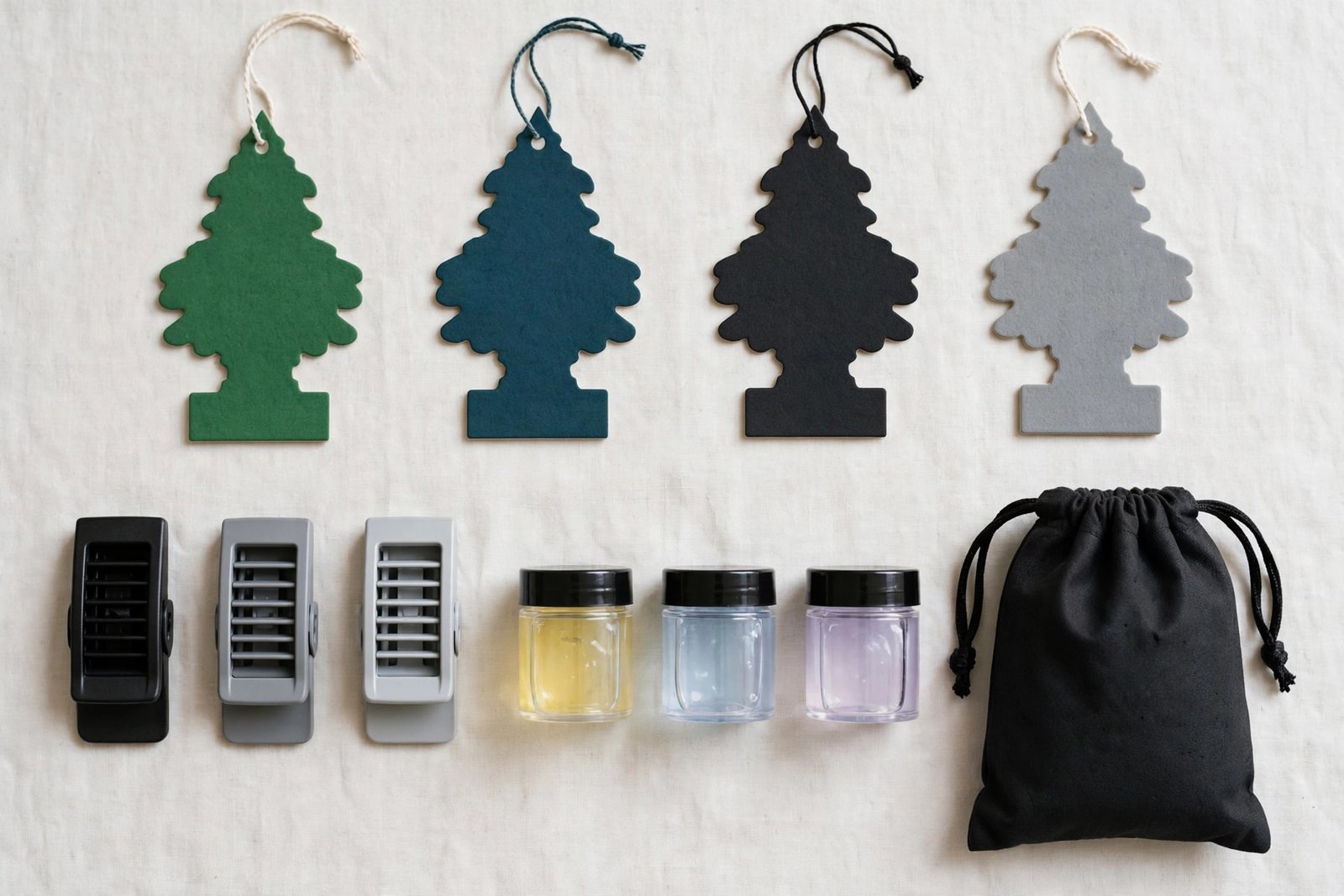
Our Top 3 Quick Picks
Short on time? Here are the three best car air freshener brands you can buy with confidence in 2026:- Best Overall: Febreze Car — the best balance of real odor elimination, adjustable scent strength, and wide availability.
- Best Value: Little Trees — the iconic budget pick. Pennies per week, dozens of scents, sold everywhere.
- Best Premium: Drift — natural wood diffuser with sophisticated, subtle fragrance for drivers who hate synthetic-smelling cars.
The 10 Best Car Air Freshener Brands, Ranked
1. Febreze Car — Best Overall
Febreze Car earns the top spot among the best car air freshener brands because it does the one thing most fresheners only pretend to do: eliminate odors instead of burying them. From Procter & Gamble, the Febreze Car line is built around odor-neutralizing technology, and the vent-clip format puts it exactly where cabin air flows. An adjustable intensity dial is the standout feature — start low, dial up only if you need it.Pros
- Genuine odor elimination, not just masking
- Adjustable scent intensity on most clips
- Clean, laundry-like scent range (Unstopables, Linen & Sky) that suits shared cars
- Available in virtually every auto and grocery aisle
Cons
- Vent clips only work when air is flowing — weak with the fan off
- Stronger scents can overwhelm sensitive passengers at full strength
- Refills cost more over a year than hanging paper options
Pros
- Unbeatable price — the cheapest credible freshness per week
- Huge scent library, easy to swap and try new ones
- Sold everywhere: gas stations, supermarkets, auto shops
- Multiple formats beyond the classic hanging tree
Cons
- Classic paper trees start strong and fade fast — weeks, not months
- The hanging format swings in your field of view
- Initial scent blast can be overpowering in small cabins
Pros
- Sophisticated, subtle scents — no synthetic perfume blast
- Beautiful design; doubles as a car accessory
- Cleaner ingredient story than mass-market brands
- Excellent gift presentation with the starter kit
Cons
- Premium pricing for a passive diffuser
- Scent throw is deliberately subtle — some drivers read it as weak
- Ongoing refill costs add up
Pros
- Recreates the new-car smell better than any hanging freshener
- Total control: spray only when and where you want it
- Pairs naturally with a detailing routine
- No permanent fixture cluttering the cabin
Cons
- Fades within hours to days — a recurring ritual, not fit-and-forget
- Easy to over-spray in a small cabin
- You need to keep the bottle in the car
Pros
- Deepest scent library of any car fragrance brand
- Multiple formats: jars, vent sticks, powered diffuser
- Crafted, recognizable fragrances instead of generic fresh
- Great if you already love their home scents
Cons
- Premium pricing for the name and scent complexity
- Powered diffuser needs a 12V socket and costs the most here
- Strong scents can overwhelm compact cars
Pros
- Zero fragrance — ideal for allergies, asthma, and sensitive passengers
- Lasts around a year, far longer than scented options
- No chemicals added to cabin air
- Eco-friendly: charcoal is compostable at end of life
Cons
- Will never make your car smell good — only smell like nothing
- Higher upfront cost than it looks like for “a bag of charcoal”
- Works slowly over days, not minutes
Pros
- Serious odor elimination — especially smoke
- Budget-friendly pricing
- Gel format works passively for weeks
- Trusted by detailers for problem cars
Cons
- Spray is potent — ventilate after use, don’t overdo it in an occupied car
- A problem-solver, not an everyday pleasant-scent product
- Scent options are limited compared to fragrance brands
Pros
- Spillproof can format — tidy, adjustable, cup-holder friendly
- Strong, long-lasting scent output
- Huge scent range beyond the famous cherry
- Budget-friendly multipacks
Cons
- “Strong” is the operative word — too much lid opening overwhelms small cars
- Scent can fade unevenly as the can ages
- Can occupies a cup holder or storage spot
Pros
- Genuinely distinctive, refined fragrances
- Sleek cartridge design with adjustable scent control
- Cult-favorite scents (Squash) with loyal followings
- Feels like an accessory, not an afterthought
Cons
- Premium pricing plus ongoing refill costs
- Availability can be patchy outside specialty retailers
- Bolder scents are love-or-hate
Pros
- Reaches vents and upholstery that surface fresheners can’t
- One treatment can reset years of built-up odor
- Simple process: set it off, let the AC circulate, air out
- From a trusted detailing giant
Cons
- Single-use treatment, not an ongoing freshener — you’ll want a daily product after
- Requires following instructions carefully and airing the car out before driving
- Overkill if your car just needs light freshening
| Brand | Award | Best For | Main Formats |
|---|---|---|---|
| Febreze Car | Best Overall | Odor elimination + fragrance | Vent clips |
| Little Trees | Best Value | Classic budget freshness | Hanging paper, vent clips, fiber cans |
| Drift | Best Premium | Natural wood, subtle scent | Wood visor clip |
| Chemical Guys | Best Spray | New-car smell sprays | Sprays |
| Yankee Candle | Best Fragrance Variety | Fragrance-first variety | Car jars, vent sticks, powered diffuser |
| PURGGO | Best Fragrance-Free | Fragrance-free odor absorption | Bamboo charcoal bag |
| Ozium | Best for Smoke | Smoke and tough odors | Spray, gel |
| California Scents | Best Spillproof Can | Spillproof can freshness | Scented cans, vent sticks, sprays |
| Air Spencer | Best Japanese | Premium Japanese fragrance | Cartridge (cup holder / dash) |
| Meguiar’s | Best Odor Reset | One-shot odor reset | Fogger mist |
How We Evaluate Car Air Freshener Brands
Ranking the best car air freshener brands fairly means judging very different products — a hanging tree and a smart diffuser don’t compete on the same terms. Here’s the criteria we use for every brand on this list:- Odor performance: does it eliminate smells or merely mask them? We weigh real odor-fighting ability above raw scent strength.
- Scent quality and range: how refined the fragrances are, and how many options the brand offers.
- Format and usability: how easy the product is to install, adjust, and live with day to day.
- Longevity: real-world lifespan per unit — weeks for hanging paper, months for cans and gels, about a year for charcoal.
- Value: cost per month of freshness, not just sticker price.
- Safety and transparency: we review manufacturer safety data and favor brands that disclose ingredients and usage warnings.
What to Look for When Buying: A Quick Shopping Guide
Before you pick from the best car air freshener brands above, run through these three fundamentals:Type. Hanging fresheners are cheapest but swing in your sightline. Vent clips are discreet and adjustable but need airflow. Cans and cartridges sit in cup holders — tidy, but they occupy one. Sprays and foggers are occasional tools, not daily solutions. Match the format to how you actually drive.Scent. “Fresh” means different things to different noses. Clean/laundry scents (Febreze) suit shared cars; complex fragrances (Air Spencer, Yankee Candle) suit enthusiasts; subtle woods (Drift) suit the scent-sensitive. When in doubt, choose adjustable — intensity control is the most underrated feature in this market.Safety. Ventilate your car, don’t stack multiple strong products, and keep fresheners away from direct contact with skin and eyes regardless of brand. Fragrance-free charcoal is the safest profile for kids, pets, and sensitive passengers. For the full breakdown, read our guide on whether car air fresheners are bad for your health.How to Choose the Right Brand for You
Ten brands is still a lot. Narrow it down with five questions:1. Do you want fragrance or odor removal?
This is the fundamental split. Brands like Yankee Candle, Drift, Air Spencer, and California Scents are in the fragrance business — they make your car smell like something pleasant. PURGGO, Ozium, and Meguiar’s are in the odor-removal business — they make your car smell like nothing. Febreze Car tries to do both. If your car has a real odor problem (smoke, mildew, spills), start with an eliminator; add fragrance only after the source is handled.2. What format fits your car and habits?
Hanging fresheners are cheapest but swing in your sightline. Vent clips are discreet and adjustable but need airflow. Cans and cartridges sit in cup holders — tidy, but they occupy one. Sprays and foggers are occasional tools, not daily solutions. Match the format to how you actually drive: rideshare drivers live on vent clips, detailers live on sprays.3. How sensitive is your nose — and your passengers’?
Strong scents can trigger headaches in enclosed cabins. If you drive with passengers, kids, or anyone scent-sensitive, lean toward adjustable formats, subtle brands like Drift, or fragrance-free PURGGO. For a deeper breakdown of real-world lifespans by type, see our longest-lasting car air fresheners guide.4. What’s your budget per month of freshness?
Think in cost-per-month, not sticker price. A budget hanging tree replaced every few weeks can cost more over a year than a mid-range vent clip that lasts longer — while a premium charcoal bag amortized over twelve months is suddenly reasonable. Decide whether you’re buying disposable freshness or a longer-term solution.5. How long should it last?
Passive formats (gels, charcoal, wood) trade immediacy for longevity; sprays trade longevity for control. Match the lifespan to the job: daily freshness needs a passive product; a pre-sale detail needs a spray or fogger.FAQ: Best Car Air Freshener Brands
Which car air freshener brand lasts the longest?
For continuous passive use, fragrance-free charcoal options like PURGGO last the longest — around a year of odor absorption. Among scented brands, spillproof cans (California Scents) and wood diffusers (Drift) typically outlast hanging paper trees by a wide margin. Sprays are the shortest-lived by design.What is the most popular car air freshener brand in the US?
Little Trees remains the most recognized brand by a large margin — the hanging tree silhouette is iconic worldwide. Febreze Car is the dominant vent-clip brand thanks to Procter & Gamble’s distribution, and California Scents has a huge loyal following for its cans.Are expensive car air freshener brands worth it?
Sometimes. Premium brands like Drift and Air Spencer genuinely offer more complex, refined fragrances and better design. But price doesn’t always equal performance — a budget Ozium gel can outperform a premium product at pure odor elimination. Pay for what you value: scent sophistication, design, or raw odor-fighting power.Which brand is best for eliminating cigarette smoke smell?
Ozium built its reputation on smoke odor, and Meguiar’s Whole Car Air Re-Fresher is designed as a one-shot treatment for ingrained smells. For ongoing maintenance after the initial treatment, a charcoal absorber like PURGGO keeps smoke odor from rebuilding. No freshener alone fixes smoke damage without cleaning the source first.Do car air freshener brands differ in safety?
Formulations vary. Fragrance-free charcoal bags add nothing to the air, which is the safest profile for sensitive individuals. Brands emphasizing essential oils and cleaner ingredients (like Drift) market themselves on that basis. As a rule: ventilate your car, don’t stack multiple strong products, and keep fresheners away from direct contact with skin and eyes regardless of brand.Can I mix products from different brands?
You can, but restraint wins. One primary scent layer plus one neutral odor absorber (charcoal) is the practical maximum. Stacking two or three strong fragrances from different brands creates a muddled, headache-inducing mix — and makes it impossible to tell which product is actually working.How often should I replace my car air freshener?
It depends on the format: hanging paper trees every 2–4 weeks, vent clips every 30–45 days, gel cans every 4–8 weeks, wood diffusers every 30–60 days with refills, and charcoal bags roughly once a year. When you stop noticing the scent, it’s done — nose fatigue means it faded long before you realized.The Bottom Line
There is no single “best” car air freshener brand — only the best brand for your situation. Want cheap and cheerful? Little Trees or California Scents. Fighting real odors? Ozium, Meguiar’s, or PURGGO. Treating scent as a luxury? Drift or Air Spencer. Everyday balance? Febreze Car or Chemical Guys.The smartest move most drivers can make: stop buying random fresheners and pick a system — one odor-control layer and one fragrance layer, matched to your car and your nose. Do that, and any of the ten best car air freshener brands above will serve you well.How Long Does Each Brand’s Freshener Last?
Longevity has less to do with the brand name and more to do with the format you choose. Hanging paper trees are the shortest-lived — most fade noticeably after two to four weeks, with the strongest scent in the first few days. Vent clips typically run for about a month, though the scent weakens as the cartridge or oil reservoir empties. Sprays are the most short-lived of all; a spritz refreshes the cabin for hours to a day or two at most, which makes them a top-up tool rather than a set-and-forget solution. Gel and scented-can formats land in the middle, usually lasting several weeks before the fragrance base dries out. Bamboo charcoal bags are the outlier: because they absorb odors instead of releasing fragrance, they keep working for up to a year with periodic recharging in sunlight.
Heat is the great accelerator. A car parked in summer sun can reach temperatures that drive fragrance out of a hanging tree or vent clip in days instead of weeks. If your freshener seems to die young, where you park matters more than which brand you bought. Turning a vent clip’s intensity down when the car is parked, or slipping a hanging freshener into the glove box on hot days, can stretch its useful life.
Replace a freshener when you stop noticing it. Nose fatigue means the scent usually fades long before you consciously register the loss, so waiting until you smell nothing is waiting too long. A good rule of thumb: swap hanging trees monthly, vent clips every four to six weeks, gels and cans when the fragrance base looks shrunken or dried, and charcoal bags once a year.
Car Air Freshener Brand Safety: What to Watch For
Air fresheners are safe when used with a little common sense, but placement matters. Never hang a freshener where it can swing into your field of vision or interfere with the rearview mirror — a dangling tree that blocks your view at the wrong moment is a genuine hazard. Keep vent clips clear of airbag deployment zones on the dashboard and A-pillars, and don’t wedge anything into vents so tightly that it damages the louvers.
Parked-car heat deserves respect. On a hot day the cabin becomes an oven, and concentrated fragrance oils can soften plastics or leave residue on the surfaces they touch. Don’t rest a freshener directly on the dashboard, leather seats, or touchscreens — oils and dyes can stain or damage finishes. If a clip leaks, wipe the area promptly with a damp cloth.
Be considerate of sensitive passengers. Strong fragrances in an enclosed cabin can cause discomfort for people with allergies or scent sensitivities, and children and pets ride lower in the cabin where air circulation differs. When in doubt, choose a milder scent, dial the intensity down, or switch to a fragrance-free charcoal bag for shared or family cars.
Used sensibly, any of the brands above can keep your cabin pleasant without drama. For a broader look at picking the right format for your car and habits, see our guide to the best car air freshener options for 2026.
Can I use two different brands at the same time in my car?
You can, but restraint wins. Two strong fragrances in a small cabin usually clash rather than blend, and layering products can push scent levels from pleasant to overpowering fast. If you want to combine, pair one mild fragrance with one neutral odor absorber like a charcoal bag — that gives you freshness plus odor control without a scent war.
Which car air freshener brands offer fragrance-free options for sensitive noses?
Charcoal-based options are the main fragrance-free choice — bamboo charcoal bags absorb odors without adding any scent to the air, which makes them the go-to for sensitive noses. Some vent-clip and diffuser brands also offer unscented or “clean air” refills, though availability varies. If fragrance sensitivity is a concern, start with a charcoal bag and add scent only if the neutral cabin isn’t enough.
Do I need a different brand for summer heat vs winter?
Not a different brand — a different strategy. Summer heat accelerates fragrance release, so milder formats like vent clips on low settings or charcoal bags tend to behave better in hot months. In winter, when windows stay shut and the heater runs constantly, a vent clip gets more airflow and can actually perform better. The practical move is adjusting placement and intensity with the seasons rather than switching brands.
As an Amazon Associate, we earn from qualifying purchases.