
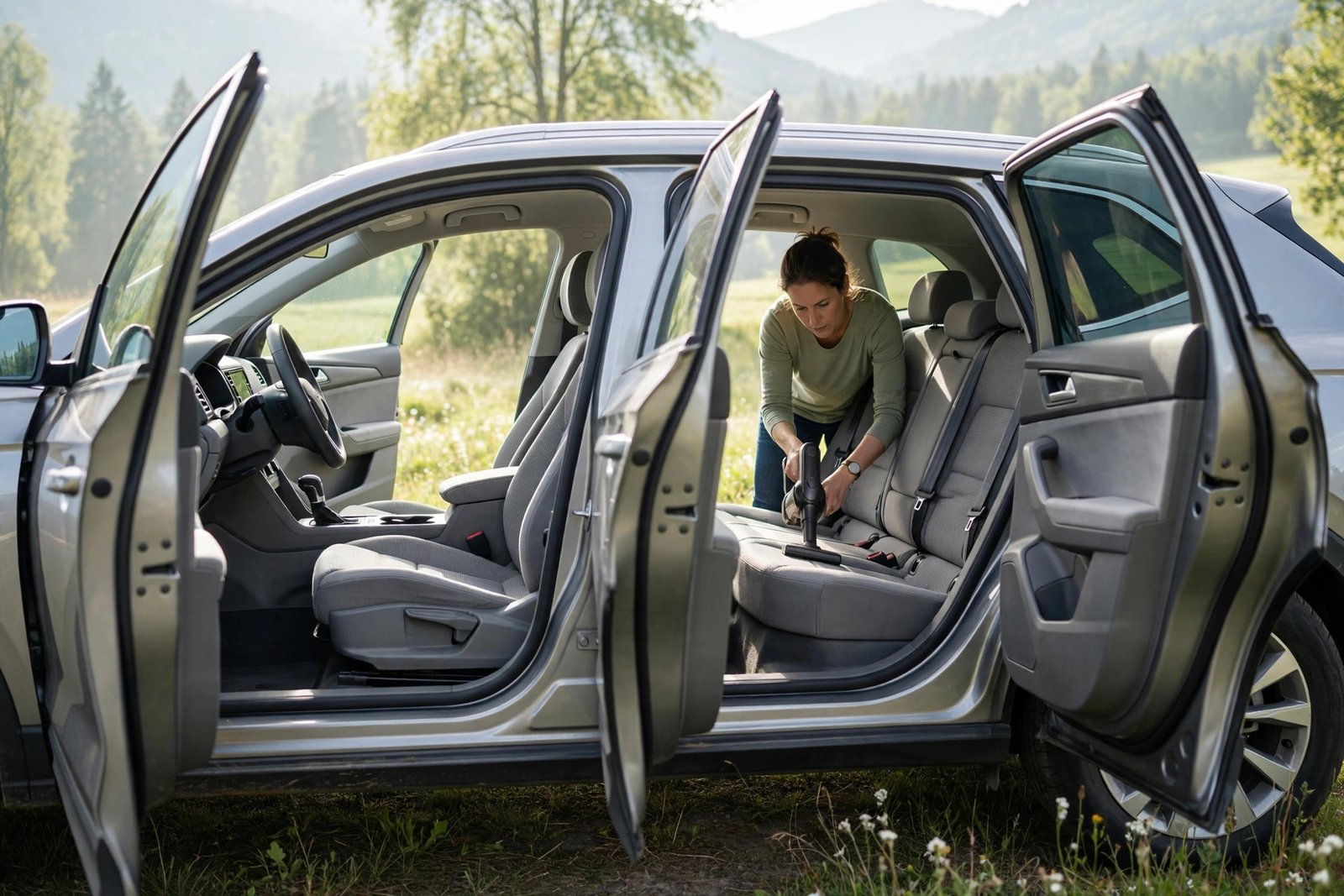
Short answer: Learning how to get food smell out of car interiors starts by removing the source first, wiping or vacuuming the affected area, cleaning fabric with a mild soap solution or baking soda, ventilating the car, and only then adding an air freshener. Masking the smell before cleaning it almost never works, because the odor is usually trapped in fabric, carpet, or a spill you cannot see. This guide walks through exactly how to get food smell out of car seats, carpets, and hard surfaces, step by step.
Why Food Smells Linger in a Car
A car is a small, sealed space full of absorbent material. Fabric seats, carpet, headliners, and floor mats soak up cooking oil, sauces, and drink spills, and heat makes the problem worse: on a warm day, trapped residue releases odor again every time the cabin warms up. Air conditioning can also spread the smell, because odors settle in vents and cabin filters over time. That is why a quick spray of air freshener fades in an hour while the underlying smell returns the next morning.
Anyone looking up how to get food smell out of car cabins quickly should start here, because the other reason food odor lasts is that the source is often hidden. A takeout bag can leak into a seat seam, a sauce cup can tip under a seat, or a few drops of coffee can soak into carpet padding. Before you clean anything, find the source. Check under both front seats, between seat cushions, in door pockets, in the trunk, and under floor mats. If you skip this step, every other step is wasted effort.
First Steps: How to Get Food Smell Out of Car Fast
If you need to learn how to get food smell out of car today, start with these steps in order:
- Remove everything food-related. Take out bags, cups, wrappers, and leftovers. Check the trunk too, since grocery and takeout bags often leak there unnoticed.
- Vacuum thoroughly. Vacuum seats, carpets, and mats, including seams and crevices, to lift crumbs and dried residue.
- Wipe hard surfaces. Use a damp microfiber cloth with a small amount of mild dish soap on the dashboard, console, door panels, and steering wheel. Wipe again with a clean damp cloth so no soap film remains.
- Ventilate. Open all doors for 15 to 30 minutes if it is safe to do so, and run the fan with fresh air (not recirculation) for a few minutes. Fresh air does more than any spray at this stage.
These four steps alone solve mild cases, such as a fast-food smell from yesterday’s lunch. If the smell survives them, the real work of how to get food smell out of car fabric begins, because the odor is trapped in fabric or padding, and the next sections cover that.
The U.S. Environmental Protection Agency notes that indoor pollution sources releasing gases or particles are the primary cause of indoor air quality problems, and lists using and properly maintaining ventilation as one of the things you can do.
How to Get Food Smell Out of Car Seats and Upholstery
When you want to know how to get food smell out of car fabric seats, the method depends on whether the stain is fresh or dried in.
For fresh spills: Blot, do not rub. Press a clean towel or paper towels onto the spill to lift as much liquid as possible, then dab with a cloth dampened with water and a drop of mild dish soap. Blot again with a clean damp cloth, and let the area dry fully with a door open. Rubbing pushes liquid deeper into foam, which is exactly what causes a lingering smell.
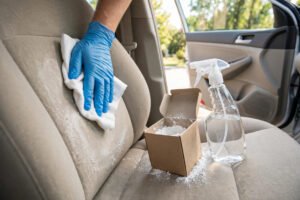
For dried or set-in food odor: Sprinkle baking soda generously over the dry fabric, work it lightly into the fibers with a soft brush, and leave it for several hours or overnight. Baking soda absorbs odor rather than covering it. Vacuum it up thoroughly afterward. For a stubborn spot, follow with a mild soap-and-water dab and a final clean-water blot, then dry completely. Damp fabric that stays closed up in a hot car can develop a musty smell of its own, so drying matters as much as cleaning.
A note on vinegar: A diluted white vinegar solution (roughly one part vinegar to three parts water) can help on some fabric odors, but test it first on a hidden spot, since vinegar can affect some dyes and trims. Never soak a seat. Light dampening, blotting, and full drying are the rule. Our baking soda guide explains the method in more detail: baking soda for car odor.
How to Get Food Smell Out of Car Leather, Plastic, and Hard Surfaces
When learning how to get food smell out of car leather, remember leather and vinyl do not absorb odor as deeply as cloth, but grease and sauce can sit in grain, stitching, and seams. Wipe leather with a damp cloth and a small amount of mild soap, then wipe again with a clean damp cloth and dry with a soft towel. Avoid household all-purpose cleaners and anything abrasive on leather unless the product label says it is safe for automotive leather. For plastic trim and cup holders, remove the holders if they come out and wash them with warm soapy water, since spilled drinks dry into a sticky film that keeps releasing odor.
Do not forget the headliner. It absorbs cooking smells easily and is easy to damage, so clean it only with a lightly damp cloth and gentle dabbing, never scrubbing or soaking. If the headliner is sagging or stained through, cleaning may not fix it, and that is a job for a professional detailer rather than more product.
Spilled Drinks, Grease, and Takeout: Stubborn Cases
Different foods leave different problems when you are learning how to get food smell out of car, and knowing which one you have saves time:
- Greasy takeout and curry: Grease clings to fabric and plastic. A mild dish-soap solution cuts grease on hard surfaces, and baking soda left overnight helps on fabric. Strong spice smells may need two rounds. If the smell is specifically fish, see our dedicated guide: how to get fish smell out of car.
- Coffee and soft drinks: Blot immediately, then clean with mild soap and water. Sugar residue turns sticky and attracts dust, so a rinse-blot with clean water matters. Coffee spilled into carpet padding may need the baking soda treatment plus full drying.
- Milk-based spills: Treat these quickly, because milk residue can sour and produce a much worse smell than the original spill. Clean and dry thoroughly, and repeat the baking soda step if any sour note remains.
- Food smell in the vents: If the odor bursts out every time you switch the air conditioning on, the cabin air filter may be holding it. Check your owner’s manual for the filter location; replacing a dirty cabin filter is a common, inexpensive fix, and it is worth doing before you blame the seats.
Baking Soda, Vinegar, and Charcoal: What Actually Helps
Home remedies for how to get food smell out of car get a lot of hype, so here is an honest summary of what each one does:
- Baking soda: Absorbs odor from dry fabric and carpet. Best used as a leave-on powder followed by vacuuming. It does not add scent, which is a strength when you want the smell gone rather than covered.
- White vinegar solution: Can cut some food odors on hard surfaces and some fabrics, but it has a strong smell of its own while wet, and it should be tested on a hidden spot first. Use it diluted, never undiluted on interior trim.
- Activated charcoal bags: These absorb odor passively over days rather than minutes. They work best as a finishing step after cleaning, left in the car for a few days, and they need occasional time in sunlight to refresh, following the product’s own instructions. Our guide covers them here: activated charcoal bags for car odor.
- Steam cleaning: A professional or rented steam cleaner can reach odor trapped deep in fabric and padding. If two rounds of baking soda and soap have failed, steam is usually the next step before considering seat or carpet replacement.
What does not help: spraying perfume or air freshener directly onto a stain, pouring undiluted bleach or harsh cleaners on interior surfaces, or leaving wet seats closed up in the sun. All three either damage materials or create a second smell on top of the first. This is also why baking soda is the first answer most guides give for how to get food smell out of car upholstery: it absorbs odor rather than covering it.
Best Car Air Fresheners to Use After Cleaning
Once you have followed how to get food smell out of car seats and carpets, cleaned the source and the fabric is dry, an air freshener can keep the car smelling pleasant. These are the types worth considering, chosen because they suit different cars and preferences rather than because of any test we claim to have run:
1. Gel air freshener for steady, low-key scent. Gel cans sit in a cup holder or door pocket and release scent slowly, which suits drivers who want a background fragrance without a strong burst when they open the door.
2. Vent clip for scent that works with the airflow. Vent clips attach to an air vent and release scent when the fan runs, which makes them a practical choice if the food smell used to come through the vents. They are also easy to remove when the scent gets too strong.
3. Activated charcoal bag for odor absorption without fragrance. If you are sensitive to fragrance, or you share the car with children or pets, a charcoal bag absorbs lingering odor without adding scent. It works slowly, so give it a few days.
If you are still choosing a longer-term scent, our main guide compares the options: best car air freshener.
Mistakes That Make Food Smell Worse
- Covering instead of cleaning: When learning how to get food smell out of car, freshener on top of a spill seals the odor in and mixes two smells together.
- Soaking seats: Too much liquid drives odor into foam and padding, where it is far harder to remove.
- Closing a damp car: Wet fabric in a sealed, warm car develops mustiness. Always dry with doors open or good airflow.
- Using the wrong cleaner: Bleach, ammonia-based cleaners, and abrasive products can discolor trim, damage leather, and leave chemical smells behind.
- Ignoring the filter and vents: If the cabin filter is dirty, every cleaning of the seats will seem to fail when the fan runs.
How to Keep Your Car Smelling Fresh After Takeout
Prevention is simpler than learning how to get food smell out of car again after another deep clean. Use a sealed bag or a small bin for takeout, and never leave food bags in the car overnight. Put drinks in a cup holder with a lid, and wipe a spill the same day it happens rather than next week. Keep a small pack of paper towels and a microfiber cloth in the trunk, and vacuum crumbs once a week if you eat in the car often. If you regularly carry takeout for work, a washable trunk liner or seat cover pays for itself the first time a bag leaks.
Finally, run the fan on fresh air for a minute or two after a food trip before you switch the car off. It clears cooking air from the vents instead of letting it settle there overnight.
Frequently Asked Questions
How long does it take to get food smell out of car?
Anyone asking how to get food smell out of car seats or carpets should expect this: light smells from a recent meal often clear the same day with vacuuming, wiping, and ventilation. Spills soaked into fabric or carpet padding can take one to three days, because baking soda or charcoal needs time to work and the fabric must dry fully between steps.
How to get food smell out of car seats that are cloth?
Vacuum first, blot spills rather than rubbing, clean with a mild soap solution, and use baking soda left on the dry fabric for several hours or overnight before vacuuming. Repeat once for stubborn spots, and always let the seat dry completely.
Can I use vinegar to get food smell out of my car?
Yes, diluted white vinegar can help on some surfaces, but test it on a hidden spot first and never soak fabric or trim. Wipe with a lightly damp cloth, blot dry, and ventilate, since vinegar smells strong until it dries.
Why does my car still smell like food after cleaning?
The usual causes are a missed source under a seat or in the trunk, odor trapped in carpet padding, a dirty cabin air filter, or fabric that was left damp. Re-check all four before buying more products.
Will an air freshener remove food smell from a car?
No, and this is the most common misunderstanding about how to get food smell out of car cabins: an air freshener only adds scent on top of an existing odor. It works well as a finishing step after the source is cleaned and the car is dry, but it cannot remove trapped food residue on its own.
How do I get rid of a strong curry or spice smell in my car?
Clean grease first with a mild dish-soap solution on hard surfaces, use baking soda overnight on fabric, ventilate well, and repeat if needed. Strong spice odors often need two rounds, and a charcoal bag left in the car for a few days helps with what remains.
Conclusion
Learning how to get food smell out of car interiors comes down to one order of operations: find the source, clean it, dry it, ventilate, and only then freshen. Baking soda and thorough vacuuming handle most fabric cases, a cabin filter change fixes vent-carried smells, and a simple air freshener or charcoal bag keeps the result pleasant afterward. Skip the shortcuts, give fabric time to dry, and the smell will stay gone instead of returning with the next warm day.



One Comment