Our guides are based on research of product specifications, manufacturer information, and patterns in verified buyer reviews.
How to Get Spilled Milk Smell Out of a Car
Spilled milk is one of the toughest smells a car interior can pick up. Milk soaks into fabric and foam, where bacteria break down its proteins and release the sour, rancid odor that only gets worse on warm days. If you’re wondering how to get milk smell out of car seats, the fix is straightforward: remove the source instead of masking it with fragrance.
Act fast — dried milk bonds with fibers and is noticeably harder to lift. But even week-old spills respond to enzyme cleaner and repeated baking soda treatments. Like other organic spills — see our guide to removing vomit smell from a car — milk is a protein stain, so the same removal-first logic applies: lift the liquid, neutralize the residue, absorb what’s left.
Plan on one focused hour of work plus an overnight wait while baking soda does its job. The steps below handle fresh spills and the dreaded discovery under a child seat — the most reliable method for how to get milk smell out of car interiors without cover-ups.
Why Spilled Milk Smells So Bad
Milk’s proteins, fats, and sugars are an ideal food source for bacteria. Once it soaks past the surface into the foam or padding underneath, bacteria multiply in that warm, dark environment and produce the sour compounds you smell — which is why the odor intensifies on hot days. Damp upholstery can also turn musty; the EPA’s mold guidance associates mustiness with any material that stays wet. That is why speed is the first rule of how to get milk smell out of car upholstery: every wet hour gives bacteria more time to settle deep, beyond the reach of a surface wipe.
How to Get Milk Smell Out of Car in 7 Steps
Follow these steps in order — remove, flush, neutralize, absorb, verify. This progression is the most reliable answer to how to get milk smell out of car interiors, because each step handles what the previous one loosened instead of burying the odor under scent.
Step 1: Blot Up As Much Milk As Possible
Press clean, dry cloths firmly into the spill and lift — blot, don’t rub, since rubbing drives milk deeper into the fibers. Keep swapping to clean sections of the cloth. Scoop pooled milk out of seat creases, cup holders, and door pockets first, then pull child seats and floor mats so you can reach every damp spot. Getting this first blotting step right is what makes how to get milk smell out of car upholstery work at all.
Step 2: Flush With Cold Water (Not Hot)
Dampen the area with cold water and blot again. Cold water is widely recommended for protein stains because hot water can set them, bonding the milk to the fibers. Work from the outside of the stain inward so you don’t spread it, and repeat the dampen-and-blot cycle until the cloth comes away mostly clean. This patient rinsing is central to how to get milk smell out of car fabric without setting the stain.
Step 3: Treat the Spot With Diluted White Vinegar
Mix equal parts white vinegar and cold water in a spray bottle, mist the area lightly, and let it sit 10–15 minutes before blotting dry. Vinegar’s acidity breaks down residue that water leaves behind. Test the mixture on a hidden patch first, and skip this step on leather or suede — vinegar can dry out or discolor those materials. On fabric, though, it is a key stage of how to get milk smell out of car seats, because it neutralizes residue that plain water leaves behind.
Step 4: Cover With Baking Soda and Wait
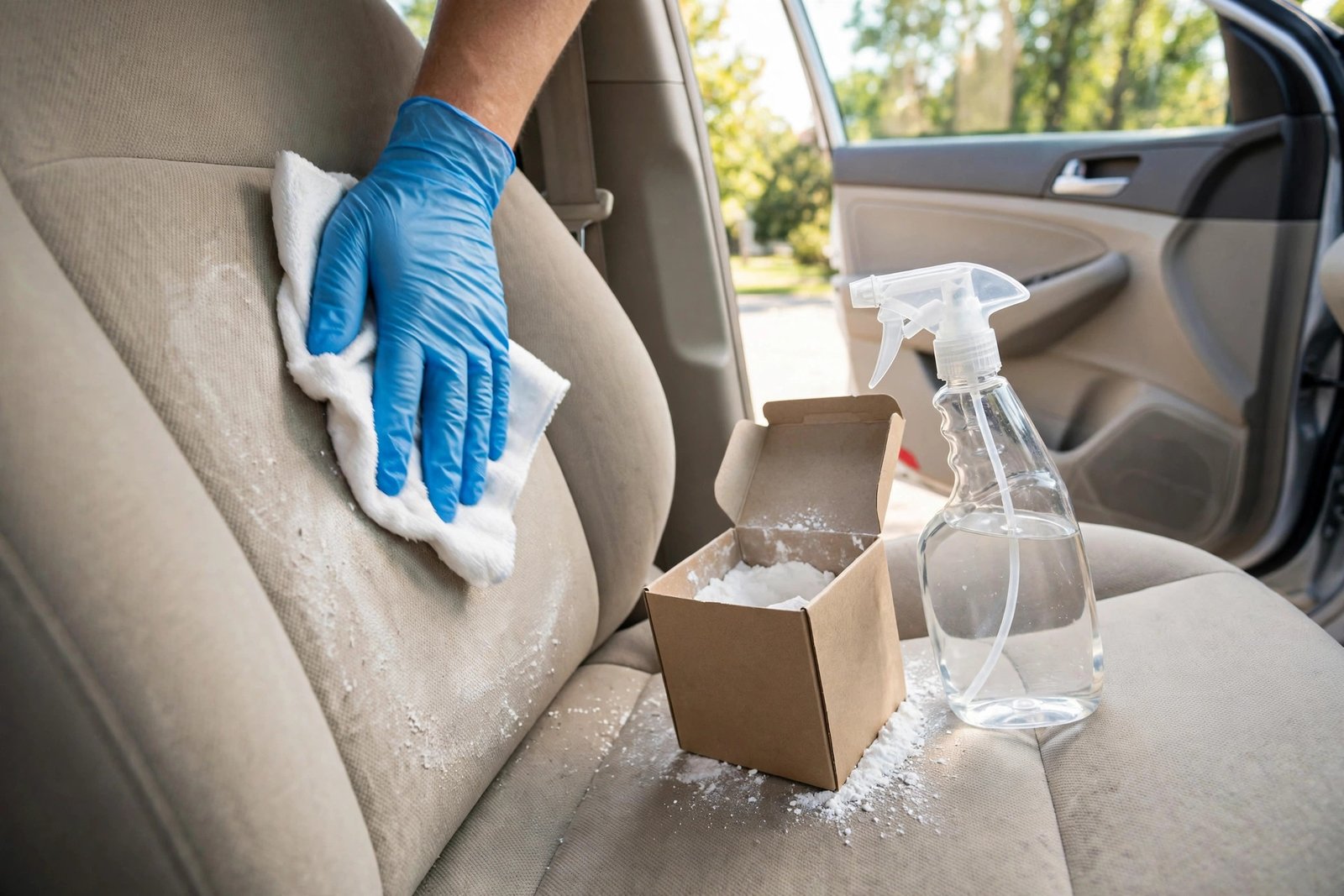
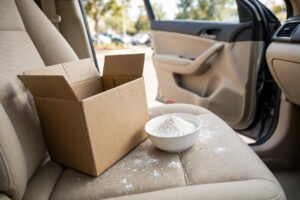
While the fabric is still slightly damp, sprinkle a generous layer of baking soda over the whole area — baking soda (sodium bicarbonate) absorbs odors from fabric as it sits. Leave it overnight, or up to 24 hours for a severe spill, with the car closed up so the enclosed space pulls odor from the surrounding fibers. That slow absorption is the quiet workhorse of how to get milk smell out of car upholstery.
Step 5: Vacuum Thoroughly
Vacuum up every trace of baking soda with a crevice tool, working the seams and stitching where powder hides. Then do the sniff test with your nose close to the fabric — the moment of truth in any how to get milk smell out of car routine, and the step most people skip. Smell gone? You’re nearly done. Still strong? Repeat steps 3 and 4 first.
Step 6: Use an Enzyme Cleaner for Deep Residue
For smells that survive baking soda, an enzyme-based cleaner is the next level. Enzyme cleaners are marketed to break down proteins, starches, and fats — exactly what a milk spill is — rather than just deodorizing the surface. Apply per the label, keep the area damp for the specified time, then blot and let it air-dry completely. For deep spills, this enzyme stage is often what finally completes how to get milk smell out of car interiors.
Step 7: Air Out and Check the Cabin Filter
Open all the doors and ventilate for at least an hour on a dry day. Fresh air is the finishing touch of how to get milk smell out of car cabins once the source is gone. If a musty note lingers only when the AC or heat runs, the spill may have reached the cabin air filter — replace it. Filters are generally recommended roughly once a year or every 12,000–15,000 miles, so check your owner’s manual for your car’s interval.
What NOT to Do With a Milk Spill
Most searches for how to get milk smell out of car upholstery end at the fastest instinct — and it’s usually the worst one. Don’t hang a strong air freshener and call it done: fragrance layered over bacterial odor makes a sweet-sour mix while the source keeps rotting underneath. Don’t use hot water or steam on a fresh protein spill before blotting, since heat can set the stain. Skip bleach and ammonia-based cleaners too — they can discolor fabric, damage stitching, and leave their own fumes in an enclosed cabin. And don’t seal a damp seat under plastic to “contain” the smell; trapped moisture feeds the mustiness you’re fighting.
Still Smells After All That? Deeper Fixes
If you still wonder how to get milk smell out of car fabrics after the steps above, the residue has reached somewhere your cloth couldn’t — the foam under the seat cover, the carpet padding, or the HVAC system. Work through these options in order of effort:
| Fix | When to Use It | Effort |
|---|---|---|
| Repeat baking soda + enzyme treatment | Smell faded but returns on hot days | Low — one more overnight cycle |
| Wet-vacuum extraction | Residue deep in carpet or seat foam | Medium — rent a carpet extractor |
| Cabin air filter replacement | Musty smell only with AC or heat on | Low — simple DIY on most cars |
| Activated charcoal bags for cars | Faint leftover odor after cleaning | Low — place under seats |
| Professional interior detailing | Smell persists for weeks | High — cheaper than a new seat |
A wet-vacuum extractor is worth renting for serious spills: it flushes solution through the fibers and pulls it back out, reaching padding that blotting never touches. If even extraction fails, a detailer can remove the seat cover to treat or replace the foam underneath — ask specifically for odor removal, not just shampooing. Once the source is genuinely gone, a mild car odor eliminator finishes any faint remainder.
How to Prevent Milk Spills in the First Place
The easiest version of how to get milk smell out of car seats is never needing to. Use spill-proof cups or bottles with locking lids for kids, and keep milk in sealed containers rather than open cups in cup holders. A washable, waterproof seat cover under a child seat catches what you can’t prevent — pull it out and machine-wash it instead of deep-cleaning upholstery. Keep a trunk kit too: microfiber cloths, a travel spray bottle of diluted white vinegar, and a box of baking soda. Catching a spill within minutes is the difference between a ten-minute wipe and a weekend project.
Frequently Asked Questions
How long does it take to get the milk smell out of a car?
A fresh spill usually takes one cleaning session of about an hour plus an overnight baking soda treatment. Older spills can need two or three rounds of enzyme cleaner and baking soda spread over several days. Plan on at least 24 hours before judging the result, since damp fabric can smell worse before it dries.
Will spilled milk smell go away on its own?
No — it gets worse. Milk soaked into upholstery keeps feeding bacteria, and the sour smell intensifies, especially in warm weather. Dried milk also bonds with fabric fibers over time, making later cleaning harder. Every guide on how to get milk smell out of car seats stresses the same point: clean it now, because waiting only deepens the problem.
Does baking soda really remove milk smell from car seats?
Yes, when used correctly. Baking soda (sodium bicarbonate) absorbs odors from fabric rather than masking them, but it needs time — apply it generously and leave it overnight or up to 24 hours before vacuuming. Deep or old spills usually need the full treatment: more than one application, or an enzyme cleaner first.
Can I use bleach on a milk spill in my car?
It’s not recommended. Bleach can discolor upholstery, weaken stitching, and leave harsh fumes in an enclosed cabin. On protein stains like milk, oxidizing cleaners can also interact unpredictably with the residue. Stick with cold water, diluted white vinegar, baking soda, and an enzyme-based cleaner — they remove the source without risking the interior. That source-first approach is the whole secret of how to get milk smell out of car upholstery safely.
How do I get milk smell out of leather car seats?
Leather is easier than fabric since milk can’t soak as deep. Wipe it up immediately, clean with a damp cloth and a pH-neutral leather cleaner, then condition the leather once dry so it doesn’t crack. Skip vinegar and enzyme cleaners on leather unless the label says they’re safe — and test in a hidden spot first.
What if the milk soaked into the carpet padding?
Surface cleaning won’t reach padding, so use a wet-vacuum extractor to flush solution through and pull it back out. Repeat enzyme treatments over several days can also work. If the smell survives, a detailer can lift the carpet to treat or replace the padding — still far cheaper than replacing the carpet or living with the smell. Either way, persistence is what makes how to get milk smell out of car padding succeed when surface cleaning cannot.
The Bottom Line
Milk spills smell terrible because bacteria feast on the proteins soaked into your upholstery — but the fix is simple: blot fast with cold water, neutralize with vinegar, absorb overnight with baking soda, and bring in an enzyme cleaner for anything stubborn. That’s how to get milk smell out of car for good, instead of burying it under fragrance.
Once the interior smells clean again, a subtle scent is the finishing touch — see our picks for the best car air fresheners to keep it that way.



2 Comments