
This step-by-step guide explains how to get coffee smell out of car seats, carpet, and upholstery.
Spilled coffee in your car is more than a sticky nuisance — the smell can linger for days, and on hot days it can turn sour enough to make the whole cabin unpleasant. The good news: in most cases you can remove the smell completely with simple household supplies and one or two dedicated odor products. The short answer: blot and clean the spill immediately, treat the spot with baking soda, follow up with an enzyme cleaner or white vinegar if creamer was involved, and finish with ventilation plus an odor absorber like activated charcoal. Air fresheners alone just mask it; the steps below actually remove it.
Why Coffee Smell Sticks Around in Cars
Black coffee stains and smells, but plain coffee residue is mostly tannins and oils that fade quickly once the spot is dry. The real problem starts when coffee contains milk, cream, or sugar. Dairy proteins spoil in heat, and a car parked in the sun gets very hot — the perfect environment for a spilled latte to turn rancid. Sugar feeds odor-causing bacteria, and coffee oils soak into seat foam and carpet backing where a surface wipe can’t reach.
Upholstery makes it worse. Fabric seats absorb liquid deep into the cushion; foam underneath holds it for days. Even leather seats can trap coffee smell in stitching and seams. That’s why the smell often “comes back” a day after a quick wipe-down — the surface looks clean while the padding underneath is still damp and smelly. Once you know where the smell hides, the steps below show how to get coffee smell out of car seats, carpet, and upholstery for good.
Step 1: Find Every Spot and Blot It Dry
Before treating anything, find the full extent of the spill. Check the seat, seat seams, the floor carpet under the seat, floor mats, and — a classic miss — the center console and cup holder area where coffee splashes and seeps down. Press clean white towels firmly into each spot until no more moisture transfers. Do not rub, especially on fabric upholstery, since rubbing spreads the stain and pushes liquid deeper.
If the spill is fresh, blotting removes most of the problem before any treatment is needed. Blotting first is the fastest win when learning how to get coffee smell out of car seats and carpet. If it’s an old spill, vacuum the area first to lift dried residue, then move to the next steps.
Step 2: Baking Soda Treatment (Best First Move)
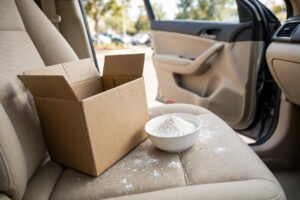
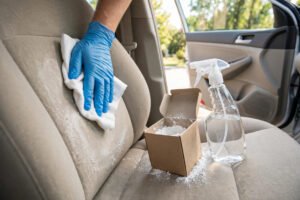
Baking soda is the single most effective first treatment for coffee smell because it absorbs both moisture and odor instead of just covering them up. Generously cover the damp or dried spill area with baking soda — don’t be shy; a thick layer works better than a sprinkle. For seat cushions, work it gently into the fabric with a soft brush so it reaches where the coffee went. This thorough coverage is what makes baking soda the foundation of how to get coffee smell out of car interiors.
Leave it for at least 4–6 hours; overnight is better. Then vacuum it up thoroughly. For many fresh spills this one step is enough. Baking soda is cheap, non-toxic, and safe on most fabrics — we explain the full method for cars in our baking soda for car odor guide.
Step 3: Enzyme Cleaner for Coffee With Milk or Cream
If your coffee contained milk, cream, or any dairy creamer, baking soda alone may not finish the job — the dairy proteins need an enzyme cleaner, the same type used for milk spills in cars. Enzyme cleaners contain bacteria-produced enzymes that break down proteins and fats rather than masking them. That protein breakdown is the key to how to get coffee smell out of car seats and carpet when milk or cream is involved.
Spray the cleaner generously onto the stain, cover the area with plastic wrap to keep it moist (enzymes need moisture to work), and let it sit for the time the product label specifies — usually 30 minutes to a few hours. Blot up the excess, let the area dry fully, and repeat if the sour-milk edge is still there. One application handles most cases; old, heat-baked spills sometimes need two.
Step 4: White Vinegar Rinse for Stubborn Residue
For coffee residue that still smells after baking soda — especially on carpet — a diluted white vinegar rinse helps. Mix one part white vinegar with one part water, lightly mist the area (don’t soak it), and blot after 15–20 minutes. Vinegar’s acidity neutralizes the alkaline odor compounds that linger after dairy spills, and its own smell disappears completely once dry. Vinegar earns its place in the process of how to get coffee smell out of car interiors by neutralizing what baking soda leaves behind.
Test on a hidden spot first on suede, alcantara, or light-colored leather. Never use vinegar on real leather without checking the leather-care instructions — for leather, stick to a dedicated leather cleaner and the enzyme step above.
Step 5: Ventilate and Absorb What’s Left
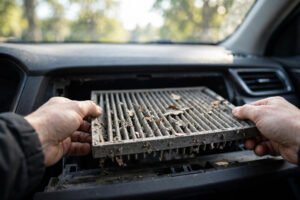
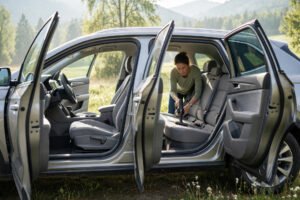
Once the spot is clean and dry, air out what remains. Open all doors and windows for 30–60 minutes — ideally in direct sunlight, which helps residual moisture evaporate from seat foam. Run the heater or AC on high for a few minutes with the windows open to flush the ventilation system, since coffee smell can settle into the cabin air filter and vents too.
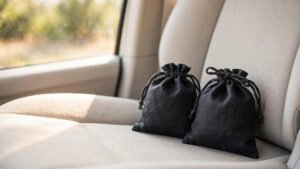
Then place an odor absorber in the car for 24–48 hours. Activated charcoal bags work well here because they absorb airborne odor molecules continuously without adding any scent — our activated charcoal bags guide covers how many to use and where to put them. This step is what removes that faint last trace of coffee that cleaning alone leaves behind. Don’t skip ventilation — airflow is the finishing touch in how to get coffee smell out of car cabins completely.
When to Call a Professional Detailer
DIY stops working when coffee has soaked through to the seat foam or carpet padding, or when the spill sat through weeks of summer heat. Signs it’s time for a pro: the smell returns every hot afternoon, the stain keeps wicking up after cleaning, or the spill reached under the seat where you can’t physically reach. A professional detailer with a hot-water extractor can pull contamination out of foam that home methods can’t reach. Expect to pay for an interior detail — prices vary by area, so check current prices locally rather than trusting old numbers. When home methods stall, a pro detailer is the fallback for how to get coffee smell out of car seats and carpet padding.
3 Products That Help With Coffee Smell in Cars
No product replaces cleaning the spill, but these three make the removal process easier. Think of them as helpers for how to get coffee smell out of car interiors faster, not replacements for cleaning. Claims below are the manufacturers’ own descriptions, not our test results — we do not run laboratory tests on products.
1. Ozium Air Sanitizer Gel
Ozium says its air sanitizer gel is designed to eliminate airborne odors rather than masking them, and it’s widely available as both a spray and a gel jar. It’s a useful finishing touch after cleaning — set the gel in a cup holder to work on the lingering background smell while the car sits parked. Check the official Ozium product page for the current formula details.
2. Activated Charcoal Odor-Absorbing Bags
Charcoal bags are the classic fragrance-free option: you place them on the seat or hang them near the spill area, and the porous charcoal surface traps odor molecules over a day or two. They contain no perfume and need no power, and most can be “recharged” in sunlight. We’ve covered them in depth in our activated charcoal bags for car odor guide.
3. Baking Soda (Any Grocery Brand)
Plain sodium bicarbonate remains the cheapest effective treatment. A fresh box from any grocery brand works — there’s nothing car-specific required. Keep a box in the trunk after this experience; it’s the fastest response to any future spill, from coffee to the food spills we cover in our food smell removal guide.
How to Get Coffee Smell Out of Car: Prevention Tips
A few habits make the next spill a non-event:
- Use a travel mug with a real seal, not a takeaway cup with a sip lid — most car coffee spills start at a speed bump with a paper cup.
- Keep a small cleanup kit in the trunk: a roll of paper towels and a box of baking soda. The first five minutes decide whether the smell ever develops.
- Clean the cup holder area monthly — sticky residue there ferments in heat and smells like old coffee even when nothing “spilled.”
- Skip dairy-based creamers on road trips if you can; black coffee spills are dramatically easier to clean up.
Frequently Asked Questions
How long does coffee smell last in a car?
A fresh spill treated within hours usually stops smelling within a day or two. An untreated spill with milk or cream can smell for weeks — heat reactivates it, so the odor may seem gone in the morning and return every afternoon. Deep spills into seat foam can last months without extraction cleaning.
Can I use coffee grounds to absorb car odors?
Dry coffee grounds in an open container do absorb some surrounding odors, and many people use them as a homemade deodorizer. But they won’t remove a spill smell on their own, and spilled grounds create a new mess — use them only as a passive absorber in a sealed container with holes, and clean up the actual spill first.
Will an air freshener get rid of coffee smell?
No — a standard air freshener masks the smell temporarily while the source keeps producing it. For a real fix, clean the spill (baking soda, enzyme cleaner if dairy was involved), then use an odor absorber like charcoal for the residue. A freshener only makes sense as the final step, once the source is gone.
How do I remove coffee smell from leather car seats?
Wipe the area with a damp cloth and a pH-neutral leather cleaner, then let it dry completely — don’t soak leather. If dairy was involved, use an enzyme cleaner labeled safe for leather, and always test first on a hidden area. For a deeper overview of odor elimination methods, see our best car odor eliminator guide.
Why does my car still smell like coffee after cleaning?
The smell usually comes from liquid that reached below the surface — seat foam, carpet backing, or the seat rails — where your cleaning didn’t reach. Repeat the baking soda treatment with a longer dwell time (24 hours), check the floor carpet under the seat, and leave charcoal bags in the car for two days. If it still returns on hot days, professional extraction is the honest next step. The approach above is how to get coffee smell out of car seats and carpet — it works as long as every spot the coffee reached gets treated.
Does vinegar damage car upholstery?
Diluted white vinegar is safe on most fabric upholstery and carpet when blotted rather than soaked, and the vinegar smell vanishes once dry. Avoid it on real leather, suede, and alcantara unless the product is specifically labeled safe — use a dedicated cleaner for those materials instead.
Conclusion
That’s how to get coffee smell out of car seats, carpet, and upholstery in almost every case: blot fast, treat with baking soda, use an enzyme cleaner for dairy spills, rinse stubborn residue with diluted vinegar, and finish with ventilation plus activated charcoal. The one thing that doesn’t work is ignoring it and hoping an air freshener covers it — find the source, remove it, and the smell goes with it.