Best Way to Get Vomit Smell Out of a Car: The 2026 Complete Guide
Few smells are as urgent as vomit in a car. Whether it came from a carsick kid, a queasy passenger, a rough night out, or motion sickness on a long drive, you need to know how to get vomit smell out of car interiors fast — because this particular odor does not fade on its own. It soaks into seat fabric, carpet fibers, and foam padding within minutes, and once summer heat bakes it in, the smell can linger for weeks or even months.
The good news: the right method removes it completely. This guide walks you through the exact process that works — the enzyme-cleaner method professional detailers rely on — plus what to do about vents, headliners, leather, and carpet. Our guides are based on research of product specifications, manufacturer information, and patterns in verified buyer reviews. If you are rebuilding your whole in-car scent strategy afterward, start with our best car air freshener guide for the maintenance side of the job.
The Quick Answer: How to Get Vomit Smell Out of Car in 7 Steps
If you need the short version of how to get vomit smell out of car upholstery, here is the method that actually works:
- Remove all solids immediately with paper towels or a plastic bag — the faster, the less soaking.
- Blot (never rub) the wet area with clean towels to pull liquid up out of the fabric.
- Apply an enzymatic cleaner generously to the full stain area, extending a few inches beyond the visible edges.
- Let it dwell for the time stated on the product label — usually 10 to 15 minutes — so the enzymes can break down the odor-causing proteins.
- Blot again and let the area dry completely, ideally with airflow from open doors or a fan.
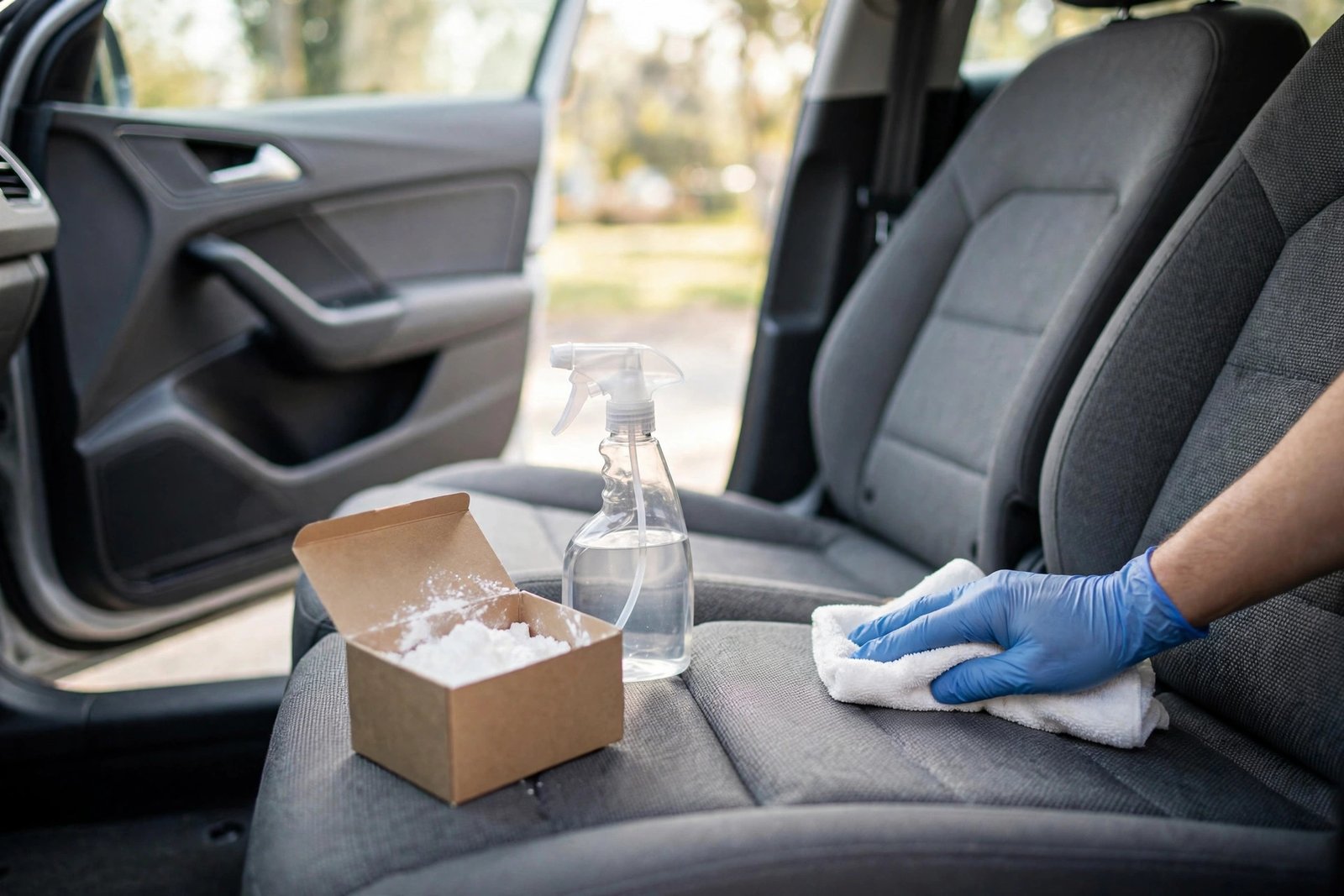
- Cover the spot with baking soda overnight, then vacuum it up the next day.
- Finish with passive odor absorption (a charcoal bag) rather than a heavy fragrance that just masks what is left.
That is the whole method in a nutshell. The sections below explain each step in detail, because getting one step wrong — especially rubbing the stain or skipping the drying — is the reason most DIY attempts fail.
Why Vomit Smell Is So Hard to Remove
If you are researching how to get vomit smell out of car interiors, understanding what you are fighting explains why quick fixes fail. Vomit is a mix of stomach acid and partially digested food, which means it carries both acidic compounds and proteins. The proteins are the real problem: they bind to fabric fibers and foam padding, and as they break down, they release the sulfur-like compounds that make the smell so distinctive and persistent.
Heat makes everything worse. A parked car in summer bakes odor molecules deeper into upholstery, then re-releases them every warm day — which is why a car that seems fine in the morning can smell awful by afternoon. Fabric seats and carpet are the worst affected because they are porous; the liquid wicks downward into the seat foam where surface cleaning never reaches. This is the core principle behind how to get vomit smell out of car interiors: you have to treat the full depth of the stain, not just the surface.
What You Will Need Before You Start
Gather everything before you begin — stopping mid-clean lets the stain set. Here is the full kit for how to get vomit smell out of car seats and carpet:
- Rubber or disposable gloves — non-negotiable for hygiene.
- Paper towels and clean microfiber cloths — for blotting, never rubbing.
- A plastic scraper or old credit card — to lift semi-solid material without pushing it deeper.
- An enzymatic stain and odor cleaner — the single most important product in this guide. These contain biological enzymes marketed to break down the proteins, starches, and fats in organic stains rather than masking them. The same class of product our pet odor guide recommends for urine and drool works for vomit for the same reason: the chemistry of the stain is similar.
- Baking soda — the classic odor absorber for the overnight step.
- A wet/dry vacuum or extraction cleaner if you have one — dramatically better than towels alone for pulling liquid from foam.
- A fan or open doors — airflow is what actually finishes the drying.
Step by Step: How to Get Vomit Smell Out of Car Seats
Step 1: Remove Solids Right Away
When it comes to how to get vomit smell out of car seats, speed matters more than technique at the start. Put on gloves, scoop up everything solid with paper towels or a plastic bag, and use the scraper for anything stuck to the surface. Work from the outside of the mess toward the center so you do not spread it. The goal is to get as much material out of the car as possible before any liquid wicks deeper.
Step 2: Blot, Never Rub
Press clean towels firmly onto the wet area and lift — repeat with fresh towels until they come away mostly dry. Rubbing grinds the proteins deeper into fibers and spreads the stain outward, making the job harder and the smell worse. If you have a wet/dry vacuum, use it now: extraction pulls liquid from the foam layer that towels cannot reach, and that foam layer is where lingering odor lives, which is why it matters so much in how to get vomit smell out of car interiors for good.
Step 3: Apply the Enzymatic Cleaner
Spray the enzymatic cleaner generously over the entire stain, going a few inches past the visible edges — the liquid almost always spreads wider than it looks. Then wait. The label’s dwell time (usually 10 to 15 minutes) is not a suggestion; the enzymes need that time to break down the odor-causing proteins — the step that truly decides how to get vomit smell out of car upholstery. Blotting too early wastes the product’s best work.
Check Price on Amazon
Step 4: Blot Again and Dry Completely
After the dwell time, blot up the cleaner with fresh towels. Then dry the area fully — open the car doors, point a fan at the seat, and give it several hours. This step is where most people fail: a seat that feels “dry enough” but is still damp in the foam will develop a sour, mildewy layer on top of the original smell. Do not move to the next step until the area is genuinely dry to the touch, pressed firmly — thorough drying is non-negotiable in how to get vomit smell out of car seats.
Step 5: The Baking Soda Overnight Treatment
Once dry, cover the entire treated area generously with baking soda — a thick, visible layer, not a dusting. Baking soda absorbs residual odor compounds from fabric surfaces, and it is cheap, unscented, and non-toxic in normal household use. Leave it overnight (8 hours minimum), then vacuum it up thoroughly with a crevice tool. For stubborn cases, repeat the enzyme treatment and baking soda cycle a second time — knowing how to get vomit smell out of car fabric for good often means doing two full rounds.
Step 6: Reset the Cabin Air
Even after the seat is clean, the cabin air itself can hold a stale echo of the smell. With the upholstery handled, run the car’s ventilation on fresh-air mode (not recirculation) for 10 to 15 minutes with the doors open. If a set-in, whole-cabin odor remains after the source is clean, an odor-eliminator bomb used in an unoccupied car is the heavy-duty option some owners turn to — always with the car empty and fully aired out afterward, a final step in how to get vomit smell out of car cabins.
Fabric, Leather, and Carpet: Material-Specific Tips
Cloth Seats
Cloth is the hardest case because it is the most absorbent, so if you are learning how to get vomit smell out of car seats specifically, start here: the full enzyme method above is built for cloth seats. One extra rule: test the enzymatic cleaner on a hidden spot (under the seat edge) first. Most are fabric-safe, but dyes vary, and a faded patch is its own problem.
Leather Seats
Leather is actually easier — it is non-porous, so vomit sits on the surface rather than wicking into foam. Wipe up promptly, clean with a damp cloth and a mild leather-safe cleaner, then condition the leather afterward so it does not dry out or crack. The smell rarely penetrates real leather, but check the seams and perforations: liquid can seep through stitching into the padding below, and perforated leather needs the same blotting care as cloth in those spots, a small detail that matters when you are working out how to get vomit smell out of car interiors.
Carpet and Floor Mats
Carpet behaves like cloth, with one advantage: floor mats come out. Pull the mats, clean them outside the car where you can rinse freely, and let them dry in the sun — sunlight and airflow do real work here. For fixed carpet, the enzyme method applies as written, and a wet/dry vacuum earns its keep on carpet more than anywhere else when you are figuring out how to get vomit smell out of car carpet.
What About Vomit Smell in Car Vents and the Headliner?
Two edge cases deserve their own mention. If you have figured out how to get vomit smell out of car seats but the smell seems to come from the vents when the AC runs, the odor has likely settled into the cabin air filter or the vent ducting — a surprisingly common situation after a bad incident, and a different fix from upholstery cleaning. Replacing the cabin air filter is cheap and often solves it outright; our guide to musty AC smells covers the filter-replacement and vent-cleaning side of this in detail.
The headliner is trickier. Its fabric is glued to a foam backing that falls apart when soaked, so you cannot use the heavy enzyme-soak method there. For headliner spots, use minimal moisture: a lightly dampened cloth with a small amount of enzyme cleaner, gentle blotting, and patience. If the headliner is badly stained, this is one of the cases where a professional detailer earns the fee — the material is unforgiving.
What NOT to Do When Cleaning Vomit From a Car
- Do not use bleach. It can discolor upholstery and carpet, damage stitching, and its fumes are miserable in an enclosed cabin. It also does not break down the proteins causing the smell — it just adds a chemical layer on top, which is the last thing you need when learning how to get vomit smell out of car upholstery.
- Do not rely on steam cleaning alone. Heat can actually set protein-based stains permanently if used before an enzyme treatment breaks them down. Enzyme first, heat-based methods only after.
- Do not mask it with a strong fragrance. Blasting a heavy perfume freshener over an uncleaned stain creates a worse combination smell and fools you into thinking the job is done while the source keeps off-gassing. Clean first, freshen second.
- Do not run an ozone generator with anyone in the car — or as a casual fix. Ozone generators are marketed for severe odor jobs, but air-quality authorities, including the EPA, warn that ozone can irritate the lungs, and these devices are not a substitute for removing the source. If a detailer suggests ozone, make sure the source cleaning happens first and the car is fully aired out before anyone rides in it.
- Do not close the car up while it is still damp. A sealed, humid cabin grows mildew fast, layering a new smell over the old one.
After the Clean: Keeping the Smell Gone for Good
Once you have learned how to get vomit smell out of car upholstery and the source is truly clean and dry, the maintenance phase is simple and cheap. Hang a fragrance-free charcoal bag — activated charcoal bags absorb background odors continuously with zero scent added, and options like the PURGGO bamboo charcoal bag keep working for a year or more with a monthly hour of sunlight to recharge.
Check Price on Amazon
If you want actual fragrance back in the cabin, add it only after the smell is gone — a vent clip on its lowest setting gives a hint of freshness without the perfume-cloud effect. For a broader survey of what actually neutralizes versus merely covers odors, our car deodorizer guide breaks down the options by how they work, which pairs well with everything you have just learned about how to get vomit smell out of car upholstery.
When to Call a Professional Detailer
Most guides on how to get vomit smell out of car interiors cover DIY well, but call a pro when the stain soaked deep into seat foam and two full enzyme cycles have not fixed it, when the headliner is badly affected, when the smell is in the ventilation system beyond a filter swap, or when the car is a lease or a sale is coming up and you need the result guaranteed. A professional interior detail with hot-water extraction typically runs in the low hundreds of dollars — worth it when the alternative is driving a car that still smells wrong every warm afternoon.
Frequently Asked Questions
How long does vomit smell last in a car?
Untreated, vomit smell in a car can linger for weeks or even months, because the proteins bind to fabric fibers and seat foam and keep releasing odor — especially in summer heat. With prompt, proper cleaning using the enzyme method described above, most cases are fully resolved within 24 to 48 hours. The timeline depends entirely on how fast you start and whether the seat foam got soaked.
Will baking soda alone remove vomit smell from car seats?
Baking soda helps, but it is not enough on its own for vomit. It absorbs surface odors well, which is why it works as the overnight finishing step, but it cannot break down the proteins soaked into seat foam — that is the enzymatic cleaner’s job. Think of it this way: the enzyme cleaner removes the source, and baking soda cleans up what is left behind.
Can I use bleach to clean vomit out of my car?
No — bleach is a bad choice for car interiors. It can permanently discolor upholstery and carpet, weaken stitching, and fill the small cabin with harsh fumes. It also fails at the actual job: bleach does not break down the odor-causing proteins in vomit, so the smell typically survives underneath the chemical scent. Use an enzymatic cleaner instead.
Does white vinegar remove vomit smell from car upholstery?
White vinegar can help as a mild deodorizing rinse because its acidity neutralizes some alkaline odor compounds, but it is a supporting player, not the main treatment. It does not break down proteins the way enzymatic cleaners do, and using too much leaves its own sharp smell behind. If you use it, dilute it, use it sparingly after the enzyme step, and dry thoroughly.
How do I get vomit smell out of car air vents?
Start by replacing the cabin air filter, which traps odor particles and is the most common culprit when the smell blows through the vents. Run the system on fresh-air mode (not recirculation) with the doors open for 10 to 15 minutes to flush the ducting. If the smell persists, the ducting itself may need a professional vent-cleaning treatment — this is beyond what sprays and fresheners can fix.
When should I call a professional detailer for vomit odor?
Call a detailer if two full rounds of enzyme treatment plus baking soda have not eliminated the smell, if the stain reached the headliner, if the odor is coming through the ventilation system after a filter change, or if the car is leased or about to be sold. Professional hot-water extraction reaches the seat foam layer that home methods struggle with, and it is the reliable fix for deep, set-in cases.
The Bottom Line
Learning how to get vomit smell out of car interiors comes down to one principle: remove the source, do not mask it. Act fast, blot instead of rubbing, let an enzymatic cleaner do the protein-breaking work, dry completely, finish with baking soda overnight, and maintain with a fragrance-free charcoal bag. Skip the bleach, skip the perfume cover-up, and save the ozone talk for professionals. Do it right once, and the smell is gone for good — no nose-holding required on your next drive. For ongoing cabin freshness after the deep clean, our best car air freshener guide picks up where this guide leaves off.